Is Bali’s Property Boom Moving East?
As areas such as Canggu, Seminyak, and even Ubud struggle with increasing congestion and overtourism, attention is slowly shifting to a part of the island that has long remained under the radar: East Bali. Districts like Klungkung and Karangasem are now emerging as the island’s next property frontier. With land prices still relatively affordable, breathtaking landscapes, and tourism potential that has yet to be fully realized, East Bali is increasingly attracting investors looking for the next opportunity before prices surge.
East Bali Rising: Why Klungkung and Karangasem Are Becoming Bali’s Next Property Frontier
For more than two decades, whenever people talked about property investment in Bali, the conversation almost always revolved around the same areas: Seminyak, Canggu, Ubud, Jimbaran, and Uluwatu.
These regions have grown rapidly, transforming into vibrant tourism hubs filled with luxury villas, resorts, restaurants, beach clubs, and coworking spaces catering to international visitors.
But success often comes with consequences.
In recent years, many parts of Bali have started experiencing a phenomenon increasingly referred to as overtourism. Roads are becoming congested, land prices have skyrocketed, green spaces are shrinking, and areas that were once peaceful villages have turned into densely developed tourism zones.
As a result, many investors are asking an important question:
Where is Bali’s next property growth area?
More and more signs point toward East Bali.
Regions such as Klungkung and Karangasem are now attracting renewed attention from investors, developers, and lifestyle buyers seeking a quieter, more authentic side of the island.
When South Bali Starts to Feel Overcrowded
For years, South Bali has been the economic and tourism engine of the island. The international airport is located there, most luxury hotels are concentrated in the region, and infrastructure has been heavily developed to support tourism.
However, rapid growth has also created several challenges.
Some of the issues increasingly visible today include:
- severe traffic congestion
- extremely high land prices
- dense construction and urbanization
- pressure on local ecosystems
- zoning and spatial planning conflicts
In areas like Canggu, land prices that once cost only a few hundred million rupiah per are have surged dramatically, reaching several billion rupiah per are in prime locations.
For new investors, this makes achieving strong returns significantly more difficult.
Naturally, many investors are now searching for emerging areas that are still undervalued but show strong tourism potential.
East Bali is beginning to stand out as one of those areas.
East Bali: A Region Long Overlooked
Compared to South Bali, the eastern part of the island has developed much more slowly.
The regency of Karangasem is known for its dramatic landscapes, including Bali’s tallest volcano, traditional villages, and stunning coastal scenery. Meanwhile, Klungkung holds an important place in Balinese history and serves as the gateway to one of the island’s most famous destinations: Nusa Penida.
Yet for many years, investors largely overlooked East Bali.
Several factors contributed to this perception:
- it is farther from the international airport
- infrastructure was previously less developed
- large-scale property projects were limited
- many people assumed the area was “too quiet”
Interestingly, these very factors are now being seen as advantages.
In an era where travelers increasingly seek authenticity and natural beauty, East Bali offers something that is becoming increasingly rare elsewhere on the island:
space, tranquility, and unspoiled landscapes.
Changing Travel Trends: Tourists Seeking a Quieter Bali
Global tourism trends have also started to influence where property development is moving.
Today’s travelers are increasingly looking for destinations that offer:
- fewer crowds
- spectacular natural scenery
- strong local culture
- authentic travel experiences
This shift is already visible in Bali.
More visitors are exploring areas that were once considered off the typical tourist path, including:
- Amed
- Sidemen
- Candidasa
- Tulamben
These destinations offer something very different from the bustling atmosphere of South Bali.
Quiet beaches, expansive rice fields, traditional villages, and a slower pace of life create a completely different kind of Bali experience.
And when tourists start arriving in larger numbers, investors often follow.
Karangasem: A Hidden Gem Starting to Shine
Karangasem is often considered one of Bali’s most scenic regions.
Here, visitors can find a combination of breathtaking landscapes such as:
- Mount Agung
- white-sand beaches
- world-class diving sites
- traditional Balinese villages
Several areas within Karangasem are beginning to gain increasing popularity.
Amed
Amed has become known as one of Bali’s best diving destinations. Travelers come here for snorkeling, freediving, and spectacular sunrises over the ocean.
Small villas, eco-resorts, and boutique guesthouses are gradually appearing across the area.
Sidemen
Sidemen is often described as “Ubud 20 years ago.”
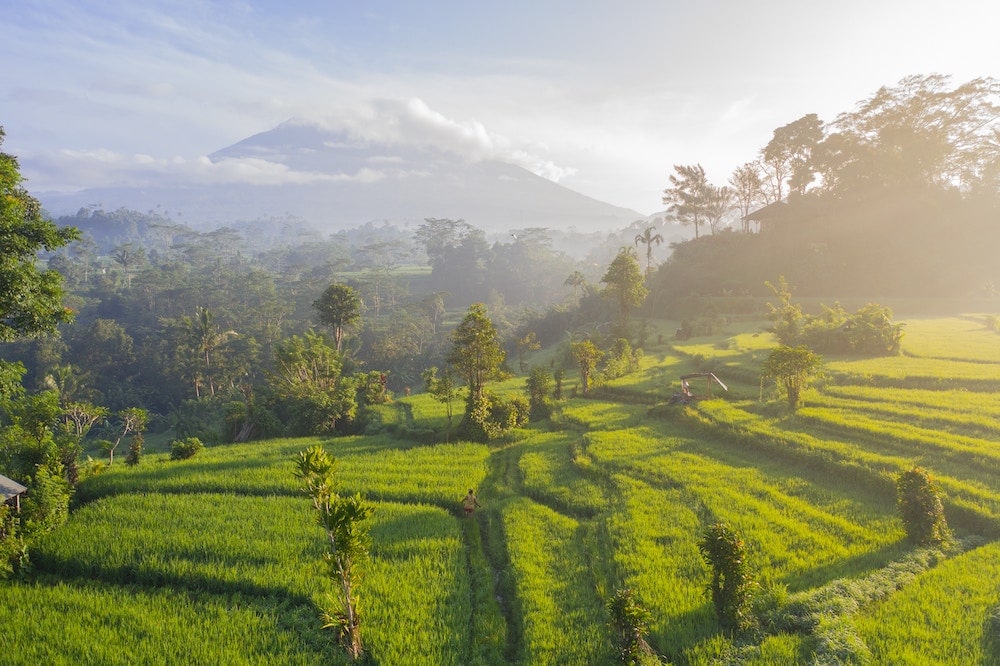
Terraced rice fields, pristine rivers, and peaceful rural surroundings make it increasingly popular among travelers seeking retreat-style experiences or wellness escapes.
Many investors are now developing boutique villas and eco lodges here.
Candidasa
Candidasa offers stunning ocean views and a much more relaxed atmosphere compared to the busy beaches of Kuta or Seminyak.
Hotels, restaurants, and small resorts are slowly experiencing a revival after years of relatively modest growth.
Klungkung: Gateway to the Nusa Penida Boom
Klungkung holds a unique strategic position.
It serves as the main gateway to Nusa Penida, which has become one of Bali’s most popular destinations over the past several years.
The rapid increase in visitors heading to Nusa Penida has indirectly stimulated development in parts of Klungkung as well.
Certain coastal areas are beginning to attract interest from investors, particularly locations with ocean views or convenient access to ferry ports.
Developers are starting to explore opportunities to build:
- sea-view villas
- boutique hotels
- small-scale resorts
- restaurants and beach cafés
Land prices in many parts of Klungkung are still significantly lower than in South Bali, although upward trends are already becoming visible.
Infrastructure Improvements Are Changing the Map
Infrastructure development often plays a crucial role in shaping property investment trends.
In recent years, there have been growing efforts to improve connectivity toward East Bali.
Some improvements that are beginning to make a difference include:
- upgrades to major roads connecting East Bali
- improved transportation access
- expansion of port facilities
- discussions of future transportation projects
Historically, property development tends to follow a familiar pattern:
infrastructure arrives first, then investment follows.
As accessibility improves, areas that once felt distant suddenly become much more attractive.
Land Prices That Still Offer Opportunity
One of the biggest reasons investors are beginning to explore East Bali is simple:
land prices remain relatively affordable.
In some areas of South Bali, land prices have already reached extremely high levels, making entry difficult for many investors.
By contrast, East Bali still offers locations where prices remain accessible.
For long-term investors, this creates an interesting opportunity.
Entering the market earlier in a region’s development cycle often allows investors to benefit from significant value appreciation as tourism and infrastructure expand.
However, such investments require careful planning and a solid understanding of local regulations and market conditions.
The Rise of Eco Resorts and Slow Tourism
The natural character of East Bali makes it particularly well suited for a growing global trend: eco tourism and slow travel.
Many travelers today prefer smaller, more intimate accommodations rather than massive hotels.
As a result, demand is increasing for properties such as:
- eco lodges
- boutique resorts
- nature-view villas
- retreat centers
- wellness resorts
This style of development fits naturally with East Bali’s landscape, where lush valleys, rice terraces, mountains, and coastal scenery remain largely intact.
It also supports a more sustainable tourism model that protects the environment while creating economic opportunities for local communities.
Challenges That Still Exist
Despite its potential, property development in East Bali is not without challenges.
Several factors still need to be considered carefully.
Infrastructure gaps
Some areas still require improvements in roads and public facilities.
Utility availability
Access to reliable water supply and electricity can vary depending on the location.
Zoning and regulations
Like other parts of Bali, spatial planning regulations must be carefully understood before developing property.
Risk of speculation
Rapid development without proper planning could eventually create the same issues seen in parts of South Bali.
Because of this, many observers emphasize the importance of responsible and sustainable development in the region.
Will East Bali Become the “Next Canggu”?
This question is frequently discussed among property investors.
The answer may not be straightforward.
East Bali may never become another Canggu.
And that might actually be its greatest strength.
Instead of turning into a nightlife and beach club hotspot, East Bali is more likely to evolve into a destination focused on:
- eco tourism
- wellness retreats
- nature-focused villas
- slow travel experiences
Such a development path could create long-term value while preserving the region’s natural charm.
A Moment of Opportunity
In property investment, timing often matters more than anything else.
Entering too early may feel slow.
Entering too late usually means prices have already surged.
East Bali today sits in an interesting position.
Interest is increasing, tourism is gradually expanding, and investors are beginning to explore opportunities.
Yet in many areas, land prices remain relatively reasonable.
For investors with a long-term vision, this phase is often described as a window of opportunity.
The Future of East Bali
Will East Bali become the island’s next major property hotspot?
No one can predict the future with absolute certainty.
However, several indicators suggest that momentum is slowly building.
When established tourism zones begin facing overtourism pressures, travelers often start seeking alternative destinations that feel more authentic and less crowded.
East Bali possesses many of the ingredients needed for sustainable growth:
- spectacular natural landscapes
- strong Balinese cultural traditions
- welcoming local communities
- both mountain and ocean tourism potential
- plenty of space for thoughtful development
If growth is managed carefully, East Bali could become an example of how tourism and property investment can expand without destroying the unique character that makes the island special.
And for many investors, the eastern side of Bali may be where the island’s next chapter is quietly beginning.