How Water Issues and Infrastructure Shape Property Values More Than You Think
Water scarcity, flooding, aging infrastructure, and rapid urban development are no longer distant environmental concerns, they are now critical factors shaping property values worldwide. From tropical investment hotspots like Bali to fast-growing urban centers across Asia, water issues and infrastructure readiness increasingly determine whether a property becomes a long-term asset or a hidden liability. This article explores how water availability, drainage systems, government infrastructure planning, and sustainability measures directly influence real estate prices, rental demand, and future investment security.
Why Water and Infrastructure Are Now Property Deal-Breakers
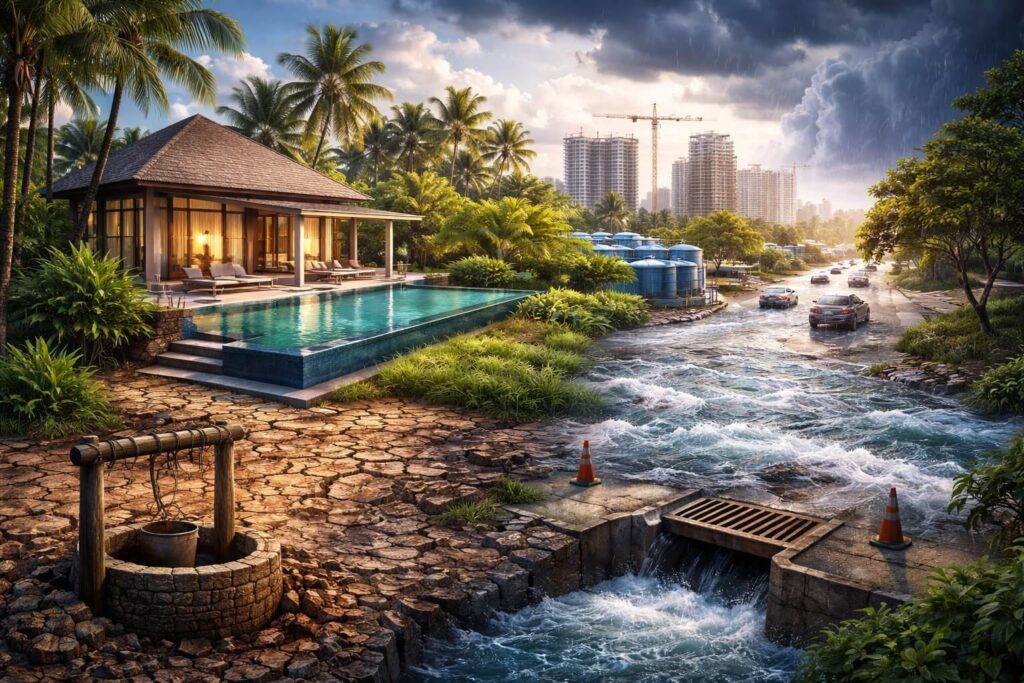
For decades, property value was largely determined by three classic factors: location, location, and location. But in today’s rapidly changing world, a new set of variables has moved to the forefront, water security and infrastructure resilience.
Buyers and investors are asking smarter questions:
- Is there a reliable water supply year-round?
- How does the area handle heavy rainfall?
- Are roads, drainage, sewage, and utilities keeping pace with development?
- What happens to this property’s value in five, ten, or twenty years?
In regions experiencing rapid growth, particularly island destinations, coastal cities, and emerging markets, these questions are no longer optional. They are central to long-term value.
This article explores how water issues and infrastructure quality influence property values, rental demand, insurance costs, and investor confidence, with a particular focus on high-growth markets like Bali.
Water: The Invisible Foundation of Property Value
Water is often taken for granted, until it becomes a problem.
Water Availability and Reliability
Properties with:
- Stable groundwater access
- Municipal water connections
- Backup systems (wells, tanks, filtration)
consistently outperform those that rely on unreliable or seasonal water sources.
In areas where dry seasons are becoming longer and rainfall patterns less predictable, water-secure properties command higher prices and attract more serious buyers.
For villas, resorts, and residential developments, water reliability directly affects:
- Occupancy rates
- Guest satisfaction
- Operating costs
- Maintenance expenses
Water Scarcity and Market Perception
Even rumors of water shortages can impact buyer psychology. Once an area gains a reputation for:
- Dry wells
- Water trucking dependency
- Community water conflicts
prices often stagnate, or decline, regardless of how attractive the location once seemed.
Flooding, Drainage, and the True Cost of Poor Planning
Flood Risk and Property Devaluation
Flooding is no longer a rare event. Climate change, urban overdevelopment, and inadequate drainage systems have made seasonal flooding a recurring issue in many regions.
Properties in flood-prone areas face:
- Higher insurance premiums
- Increased maintenance and renovation costs
- Reduced rental demand
- Lower resale value
In contrast, properties located in:
- Elevated zones
- Areas with modern drainage systems
- Well-planned infrastructure corridors
often see price premiums due to lower long-term risk.
Drainage Infrastructure as a Value Multiplier
Good drainage doesn’t just prevent flooding—it protects:
- Foundations
- Roads
- Landscaping
- Public access
Developments with integrated drainage planning age better, attract higher-quality tenants, and maintain resale appeal far longer than poorly planned projects.
Infrastructure: The Silent Driver of Property Growth
Roads, Access, and Connectivity
Infrastructure determines whether a property feels “remote” or “strategic.”
Paved roads, proper access routes, and reliable connectivity:
- Reduce travel time
- Improve emergency response
- Increase rental appeal
- Support commercial growth
A villa or residential estate with excellent road access can outperform a more “beautiful” property that is difficult to reach.
Sewage, Waste, and Environmental Impact
Areas without proper sewage and waste management systems often face:
- Environmental degradation
- Water contamination
- Regulatory crackdowns
- Negative media attention
These issues directly affect property desirability and long-term price stability.
Modern buyers increasingly value developments with:
- Centralized sewage systems
- Eco-friendly waste solutions
- Sustainable design principles
The Bali Context: A Real-Time Case Study
Bali provides one of the clearest real-world examples of how water and infrastructure issues shape property value.
Rapid Growth Meets Limited Resources
Tourism growth, population increases, and ongoing construction have placed significant pressure on:
- Groundwater supplies
- River systems
- Coastal ecosystems
In some areas, overdevelopment without infrastructure upgrades has led to:
- Water shortages
- Seasonal flooding
- Road congestion
- Community resistance
Emerging Areas vs Saturated Zones
Interestingly, property values are increasingly shifting toward areas where:
- Infrastructure planning is more structured
- Water access is more sustainable
- Local governments enforce zoning and environmental controls
This has created new “growth corridors” while older, saturated zones face stagnation unless infrastructure catches up.
Infrastructure Investment = Long-Term Price Stability
Government Projects and Property Appreciation
Major infrastructure projects—such as:
- Road expansions
- Water treatment facilities
- Flood control systems
- Public transportation links
often lead to significant appreciation in surrounding property values.
Savvy investors track infrastructure plans as closely as zoning regulations or market trends.
Private Developers Raising the Standard
Developers who invest in:
- On-site water treatment
- Rainwater harvesting
- Smart drainage systems
- Sustainable landscaping
create properties that:
- Age better
- Face fewer operational issues
- Attract premium buyers and tenants
Sustainability Is No Longer Optional
Eco-Conscious Buyers Are Reshaping Demand
Modern buyers, especially international investors, are increasingly drawn to properties that demonstrate:
- Responsible water usage
- Environmental sensitivity
- Long-term sustainability planning
Properties aligned with these values often command:
- Higher rental yields
- Stronger resale demand
- Better brand reputation
Regulations Are Tightening
Governments worldwide are implementing stricter:
- Environmental regulations
- Water usage controls
- Building standards
Properties that fail to comply risk:
- Fines
- Renovation mandates
- Loss of operational licenses
- Reduced marketability
Hidden Costs Buyers Often Miss
Many buyers focus on purchase price but underestimate:
- Water trucking expenses
- Pump and filtration maintenance
- Flood repairs
- Road access upgrades
Over time, these hidden costs can significantly reduce net returns.
Properties with strong infrastructure may appear more expensive upfront, but often prove far more profitable long-term.
Future Outlook: What Investors Should Watch
Key Trends to Monitor
- Climate adaptation infrastructure
- Smart water management systems
- Green building certifications
- Government infrastructure budgets
- Community-led sustainability initiatives
Markets that proactively address water and infrastructure challenges are far more likely to experience stable, long-term growth.
Water and Infrastructure Define the Winners
In today’s property market, beauty and location are no longer enough.
Water security, flood resilience, and infrastructure quality now play a decisive role in determining:
- Property value
- Rental performance
- Risk exposure
- Long-term investment success
Investors who understand these dynamics position themselves ahead of the market, while those who ignore them risk buying into problems that only grow more expensive over time.
In emerging and high-demand regions, the future belongs to properties that are built not just for today, but for the realities of tomorrow.