How to Build Strong Relationships with Balinese Villages and Local Communities When You Own a Villa or Project
Owning a villa or project in Bali is more than a property investment—it’s an entry into a vibrant cultural community. To truly thrive, foreign property owners must learn how to build respectful relationships with Balinese villages and local people. From introducing yourself to banjar leaders, participating in temple ceremonies, and hiring locals, to respecting sacred land and supporting community projects, the key lies in humility and participation. This guide explores practical steps for integrating into village life, avoiding conflict, and creating win-win opportunities with local communities. By treating your neighbors as partners and embracing the richness of Balinese traditions, you’ll not only protect your investment but also gain the priceless reward of belonging.
Bali is not just an island of breathtaking landscapes and thriving tourism; it is also home to a deep cultural heritage rooted in strong community values. For foreigners who own a house, villa, or property development in Bali, learning how to build respectful relationships with cultural villages and local people is essential. Beyond ensuring harmony, these relationships create a sense of belonging, smooth the progress of projects, and open doors to opportunities you might never have imagined. Understanding the unwritten rules of village life, engaging with banjar (community councils), and showing genuine respect for traditions are the keys to long-term success and peaceful living in Bali.
In this article, we’ll explore how to connect with cultural villages, earn trust from local people, and ensure that your investment in Bali is not only profitable but also enriching on a personal and cultural level.
The Importance of Respecting Balinese Village Culture
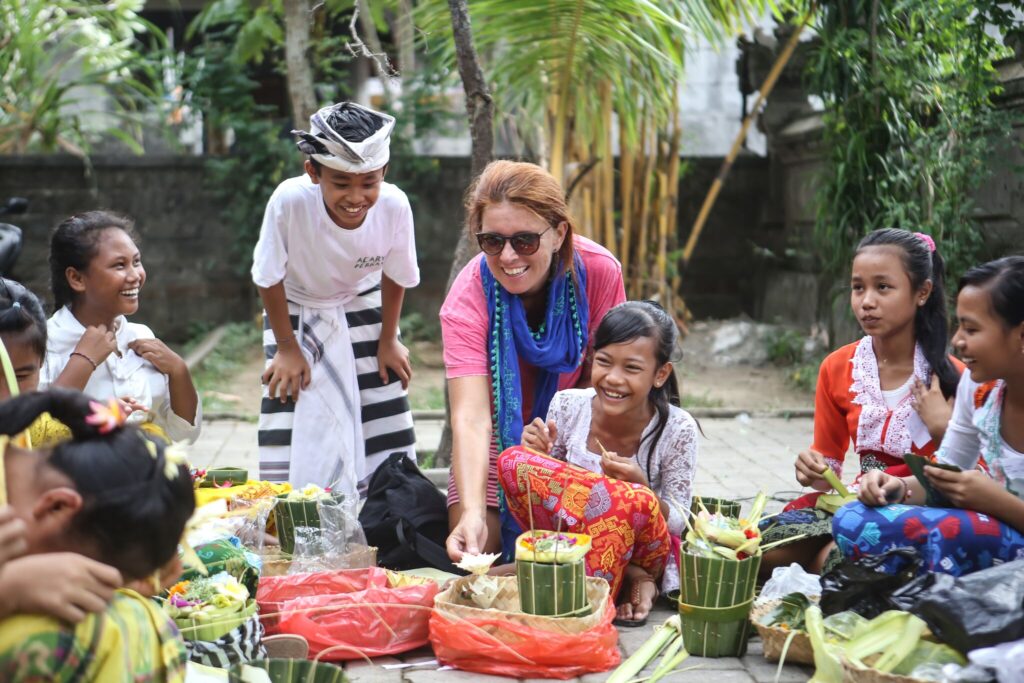
Balinese society revolves around community. Every village (desa adat) has its own structure, leadership, and traditions. Unlike in many Western settings, where property rights are viewed primarily as individual ownership, in Bali your role as a property owner is woven into the communal fabric.
- Banjar as the heartbeat of community life: The banjar is the neighborhood-level council where residents gather, make decisions, and coordinate ceremonies or projects.
- Religious life as community life: Temples and ceremonies are not just religious obligations, they are central to Balinese identity.
- Mutual cooperation (gotong royong): Villagers work together for shared benefit, whether it’s maintaining a road, preparing for Galungan, or building a community hall.
Failing to understand or respect this structure can quickly lead to tension. Conversely, embracing it builds goodwill and ensures smoother day-to-day interactions.
Introduce Yourself Properly
When you first acquire property or start a project in Bali, the initial step should always be a proper introduction to the village leadership. This means meeting with:
- Kepala desa (village head) , The administrative leader.
- Bendesa adat (traditional village leader) , Oversees cultural and religious matters.
- Banjar leaders , The neighborhood heads who organize and coordinate at the local level.
A simple offering of respect, showing up in person, perhaps accompanied by a local notary or Balinese friend, sets the right tone. Bring a small gift (fruits, traditional snacks, or ceremonial offerings) to show goodwill.
Participate in Community Life
One of the easiest ways to earn respect is to join in. While you won’t be expected to attend every event, your presence at key ceremonies, temple festivals, or banjar meetings shows you value the community.
- Attend temple ceremonies when invited, dress modestly, wear a sarong, and follow guidance from locals.
- Offer donations (punia) to temple activities. These are not mandatory, but they are deeply appreciated.
- Support local initiatives, whether a road repair fund or cultural dance event.
Even a small contribution goes a long way toward building trust.
Hire and Collaborate with Locals
Building a villa or running a project in Bali inevitably involves contractors, staff, and maintenance. Prioritizing local talent not only strengthens community relationships but also ensures smoother operations.
- Hire local gardeners, security staff, and cleaning teams.
- Work with Balinese architects and contractors where possible.
- Buy from village markets instead of only relying on imported goods.
By doing this, you directly support the economy of the community in which your property exists.
Communication and Transparency
Miscommunication is one of the most common reasons for conflict between foreign property owners and local villagers. To avoid misunderstandings:
- Always consult the banjar before hosting large events at your villa.
- Be transparent about construction projects : noise, traffic, or dust can disrupt daily life.
- Respect quiet times : such as Nyepi (Day of Silence) or temple days when loud activity is inappropriate.
Clear, respectful communication shows that you value the community as partners, not obstacles.
Respect Ceremonial Space and Sacred Land
Balinese culture places a strong emphasis on sacred space. If your property is near a temple or involves land considered spiritually significant, you must handle it with sensitivity.
- Do not block temple access with walls or gates.
- Avoid polluting rivers or springs: many are considered holy.
- Seek permission before altering old trees or shrines: these often hold spiritual importance.
Mistakes in this area can create serious conflict, so proactive respect is always better.
Offer Long-Term Commitment
Balinese communities value consistency. Showing up once with gifts is nice, but maintaining ongoing engagement is what truly builds bonds.
- Make annual donations during Galungan or Nyepi.
- Sponsor small projects like providing chairs for banjar halls or helping with school materials.
- Build friendships, share meals, attend weddings, or simply take time to chat with neighbors.
Over time, you’ll find yourself not just tolerated but warmly embraced.
A Fresh Angle: Co-Creating Value with Villages
Beyond the basics of respect and donations, there is a new and inspiring angle to consider: co-creating value with cultural villages. Instead of simply fitting in, you can actively contribute to preserving Balinese traditions while creating win-win opportunities.
Examples include:
- Partnering with the village to create cultural tourism experiences, with profits shared locally.
- Supporting eco-friendly waste management or water conservation projects.
- Hosting workshops where villagers can share traditional crafts with guests.
This approach not only helps your villa or project stand out as socially responsible but also strengthens Bali’s cultural fabric for future generations.
Practical Tips for Everyday Interaction
- Learn a few basic Balinese or Indonesian phrases, it goes a long way.
- Smile often and greet neighbors respectfully.
- Be mindful of dress, cover shoulders and knees when entering temples.
- Don’t flaunt wealth, modesty earns more respect.
- Remember that patience is essential, things move at “Bali time.”
Building a villa or project in Bali is not just about bricks and mortar, it’s about becoming part of a living culture. Respect, humility, and genuine participation in village life transform you from an outsider into a valued member of the community. By honoring traditions, supporting locals, and co-creating meaningful value, you create harmony that lasts for generations.
At the heart of it all, the secret to success is simple: treat your Balinese neighbors as partners, not just people living nearby. When you do, Bali itself will welcome you home.