Digital Nomads Don’t Want Luxury, They Want This Instead
Digital nomads are no longer just backpackers with laptops. In Bali, they represent a powerful, fast-evolving market segment that is reshaping where, how, and why property is developed. From high-speed internet and walkable lifestyle hubs to sustainability, legal clarity, and long-term livability, today’s digital nomads are far more selective than they were just a few years ago. This article explores what digital nomads really look for in Bali property in 2026 and beyond, and why understanding these preferences is essential for investors, developers, and landowners who want to stay ahead of the market.
Digital Nomads Are Redefining Bali Property

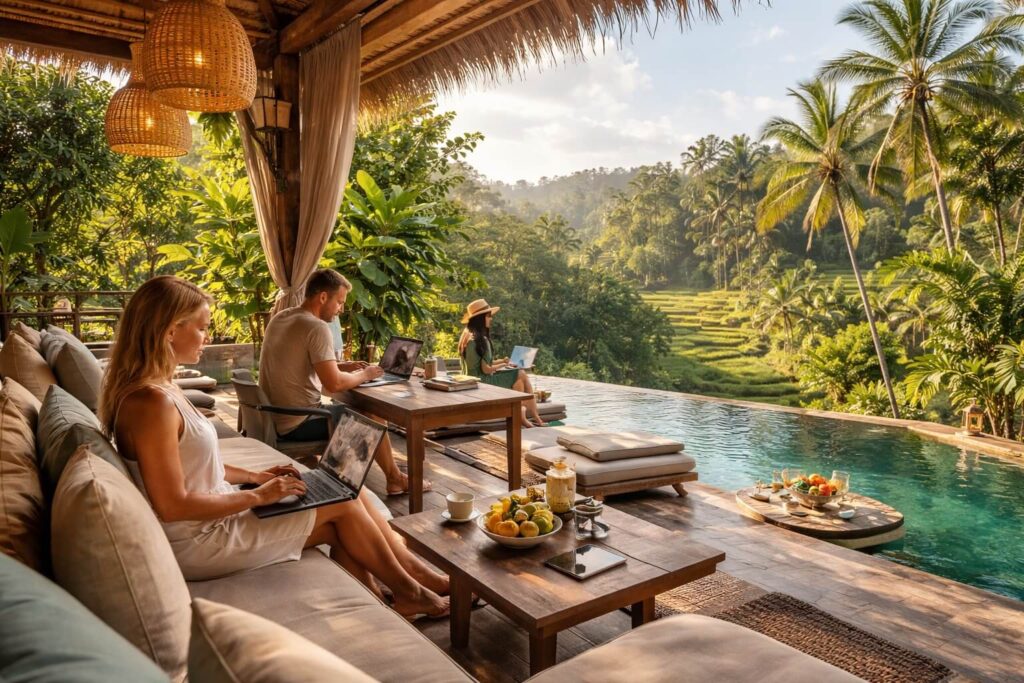
For more than a decade, Bali has been one of the world’s top destinations for digital nomads. What started with freelancers working from beach cafés has evolved into a sophisticated ecosystem of remote professionals, startup founders, crypto investors, consultants, and creatives earning global incomes while living locally.
In 2026, digital nomads are no longer a niche audience. They influence rental prices, dictate design trends, and often act as the first wave of demand in emerging locations. For property owners and investors, understanding what digital nomads want is no longer optional, it is a competitive advantage.
This article takes a deep dive into what digital nomads are actually looking for when choosing property in Bali today, how their priorities have changed, and what this means for the future of Bali’s real estate market.
Who Are Today’s Digital Nomads?
Before understanding what they want, it is important to understand who they are.
Modern digital nomads in Bali typically fall into several overlapping categories:
- Remote employees working for overseas companies
- Entrepreneurs and startup founders
- Freelancers in tech, design, marketing, and media
- Online educators and coaches
- Crypto and Web3 professionals
- Content creators and influencers
Unlike earlier generations, many digital nomads today:
- Earn stable, high monthly incomes
- Stay for 6–24 months instead of a few weeks
- Travel as couples or families
- Prioritize health, productivity, and comfort
This shift has dramatically changed property demand across the island.
Location: Lifestyle Comes First
Walkability Over Beachfront
While beachfront villas once dominated demand, many digital nomads now prefer walkable neighborhoods where daily life is easy without a motorbike.
Top priorities include:
- Cafés and healthy restaurants within walking distance
- Gyms, yoga studios, and wellness centers nearby
- Coworking spaces or business hubs close by
- Minimarkets, pharmacies, and basic services
Areas like Canggu, Berawa, Pererenan, parts of Ubud, and emerging zones such as Seseh and Kedungu reflect this shift.
Quiet Productivity Zones
After years of noise complaints and congestion in popular areas, many digital nomads are actively avoiding overcrowded streets. Properties located on secondary roads or quieter pockets within popular districts are often more desirable than main-road frontage.
Internet Is Not a Feature, It’s a Requirement
High-Speed, Stable Internet
For digital nomads, internet quality is not negotiable. A property without reliable high-speed fiber is effectively invisible to this market.
Key expectations include:
- Fiber-optic internet with consistent speeds
- Backup routers or dual ISPs
- Strong Wi-Fi coverage throughout the property
Listings that clearly state internet speed and setup consistently outperform those that do not.
Power Backup Matters
Power outages, even short ones, can disrupt meetings and work deadlines. Properties offering:
- Backup generators
- Inverters or battery systems
- Solar energy solutions
are increasingly attractive to professional remote workers.
Design That Supports Working From Home
Dedicated Workspaces
The era of working from a bed or dining table is over. Digital nomads now look for:
- Dedicated office rooms
- Built-in desks or work nooks
- Ergonomic lighting and power outlets
Even studio-style properties benefit from thoughtful workspace design.
Natural Light and Airflow
Productivity and well-being go hand in hand. Properties with:
- Large windows
- Open layouts
- Cross-ventilation
- Views of greenery
are consistently preferred over closed, dark designs.
Fully Furnished, Move-In Ready Living
Digital nomads value convenience. Most are not interested in furnishing a property themselves.
Highly desirable features include:
- Quality furniture (not rental-grade basics)
- Fully equipped kitchens
- Washing machines and storage
- Smart TVs and modern appliances
Properties that feel lived-in but uncluttered perform best in this segment.
Community and Social Connection
Proximity to Like-Minded People
Digital nomads often choose locations based on community, not just property.
They value:
- Coworking hubs
- Networking events
- Workshops and meetups
- Cafés known as social hubs
This is why properties near established nomad ecosystems maintain stronger demand—even at higher prices.
Coliving and Hybrid Models
Coliving spaces and hybrid villa–coworking concepts are growing rapidly. These appeal especially to solo nomads who want instant community without sacrificing privacy.
Health, Wellness, and Balance
Wellness as a Lifestyle
Bali’s wellness culture is a major draw. Digital nomads often prioritize proximity to:
- Yoga studios
- Pilates and fitness centers
- Healthy food options
- Wellness clinics and spas
Properties that integrate wellness—such as meditation spaces, plunge pools, or garden areas—stand out strongly.
Noise and Air Quality
After experiencing burnout and overstimulation, many nomads are actively choosing:
- Quieter environments
- Low-traffic areas
- Green zones away from pollution
This has increased demand in emerging rural-urban fringe areas.
Sustainability Is No Longer Optional
Eco-Conscious Living
Digital nomads tend to be environmentally aware and often actively seek sustainable housing.
Desirable features include:
- Solar panels
- Water filtration systems
- Rainwater harvesting
- Energy-efficient design
Sustainable properties are not only more attractive but increasingly command premium rents.
Alignment With Local Culture
There is growing sensitivity around overdevelopment. Properties that respect local architecture, green space, and community integration are more appealing than purely commercial builds.
Legal Clarity and Security
Transparent Rental Agreements
Digital nomads are more informed than ever. They want:
- Clear lease terms
- Transparent pricing
- Legal clarity on usage rights
Unclear agreements or informal arrangements are a major red flag.
Zoning and Compliance Awareness
Savvy nomads increasingly ask whether a property:
- Is properly zoned
- Has correct building permits
- Complies with local regulations
This awareness indirectly pressures developers and landlords to improve standards.
Flexibility Over Long Lock-Ins
Digital nomads value optionality.
Preferred lease structures include:
- 6–12 month leases with extension options
- Fair break clauses
- Flexible payment terms
Overly rigid long-term commitments can deter otherwise ideal tenants.
Value Perception, Not Just Price
Digital nomads are willing to pay more—but only when value is clear.
They evaluate:
- Price relative to quality
- Inclusions versus extras
- Location efficiency
- Lifestyle benefits
A well-designed, well-managed property often outperforms cheaper alternatives with poor execution.
Digital Nomads as Market Stabilizers
An often-overlooked perspective is that digital nomads can stabilize local property markets.
Unlike short-term tourists:
- They stay longer
- Spend consistently
- Integrate into local economies
- Support small businesses year-round
In emerging areas, digital nomads are frequently the first reliable tenant base, helping to de-risk early-stage developments before mass tourism arrives.
For investors, this makes nomad-focused properties an important hedge against seasonal volatility.
What This Means for Investors and Developers
Understanding digital nomad preferences allows for:
- Smarter site selection
- Better design decisions
- Stronger rental performance
- Longer tenant retention
Properties designed with digital nomads in mind often remain attractive even as market conditions change.
Designing for the Future of Bali Living
Digital nomads are not a passing trend—they are part of a broader transformation in how people live and work globally.
In Bali, their influence on property design, location demand, sustainability standards, and rental structures is already visible. Investors and developers who adapt early will not only capture stronger returns but help shape a more balanced, resilient property market.
Understanding what digital nomads look for today is ultimately about understanding the future of Bali property itself.