
Can You Build in Bali’s P-1 (Green Zone) Land? Understanding the Rules, Risks, and Realities
Buying land in Bali can be a dream come true, but not every plot is meant for villas, resorts, or investment. Much of Bali’s land is zoned P-1, known as the agricultural or green zone, where strict building restrictions apply. In this in-depth guide, we explore what P-1 zoning really means, the legal risks of building in agricultural land, why enforcement is increasing, and how zoning connects to Bali’s sustainability and food security. We also look at what investors can do instead, including safe alternatives and smarter strategies. Whether you are an expat, developer, or property buyer, understanding P-1 zoning can protect your investment and help you make better long-term decisions in Bali’s dynamic property market.
Why Green Zone Land Matters in Bali
 Bali is a tropical paradise that continues to attract property buyers, investors, and lifestyle seekers from all over the world. But behind the stunning rice fields and lush landscapes lies a complex web of zoning regulations that determine what can and cannot be built. One of the most misunderstood categories is P-1 land, also called the green zone or agricultural zone.
P-1 land exists to protect Bali’s agricultural base, prevent overdevelopment, and maintain environmental balance. Yet, many investors are tempted by its beauty and relatively lower price. This creates a recurring question: “Can I build on P-1 land in Bali?”
The short answer is: legally, no, at least not for villas, homes, or commercial property. But the full picture is far more nuanced, involving not only legal frameworks but also cultural expectations, local practices, environmental needs, and the reality of Bali’s booming property market.
In this article, we will explore everything you need to know about P-1 zoning in Bali: the laws, the risks, the reality on the ground, and the smarter strategies you can use if you are serious about investing in Bali property.
What Is P-1 Zoning?
P-1 zoning refers to agricultural or green zone land in Bali’s spatial planning (RTRW – Rencana Tata Ruang Wilayah). The primary function of this land is agricultural production, food security, and ecological sustainability.
Key Characteristics of P-1 Zoning:
- Reserved for farming, rice fields, plantations, and food crops
- Intended to protect subak irrigation systems and cultural landscapes
- Cannot legally be converted into residential, commercial, or tourism use
- Plays a crucial role in balancing Bali’s ecology and economy
In other words, P-1 land is the backbone of Bali’s food system and cultural heritage. Without it, Bali risks losing not only its ability to feed its population but also its world-famous rice terrace landscapes that attract millions of tourists every year.
Legal Restrictions: What You Can and Cannot Build in P-1
Officially, Bali’s government enforces strict limits on what structures can be built on P-1 land.
Legally Allowed:
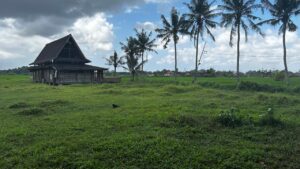
- Simple farm huts (gubuk tani) for tools and shelter
- Small storage sheds for harvests
- Agricultural infrastructure such as irrigation systems or animal pens
Not Allowed:
- Permanent houses
- Villas or commercial accommodation
- Restaurants, shops, or entertainment venues
- Industrial facilities
The KDB (Koefisien Dasar Bangunan) or Building Base Coefficient for P-1 land is essentially 0% for non-agricultural purposes. In practical terms, this means you cannot legally cover any significant portion of P-1 land with buildings unrelated to farming.
Some local regulations allow 1–5% building coverage, but this is strictly for farm-related infrastructure. For anything beyond that, permits will not be granted.
Risks of Building Illegally on P-1 Land
Despite the rules, many investors and even locals have built villas and residences on P-1 land. While this may seem like a shortcut, the risks are real and growing.
1. Demolition and Seizure
In recent years, Bali authorities have begun cracking down on illegal builds in green zones. Properties built without proper permits risk being sealed, fined, or demolished.
2. No Legal Permits
Building in P-1 means you cannot obtain an IMB (Building Permit) or PBG (now the official building approval system). Without this, your property has no legal standing.
3. Resale Problems
Buyers are increasingly cautious. Properties on P-1 land are harder to sell and often fetch lower resale values because of the legal uncertainty.
4. Community Backlash
Balinese culture places a high value on the subak system and food security. Building in P-1 can cause friction with banjar (village councils) and adat (customary law), leading to social conflicts.
5. Environmental Damage
Overdevelopment in agricultural zones threatens Bali’s rice terraces, water balance, and food supply. This makes enforcement not only a legal but also a moral issue.
The Reality on the Ground: Why People Still Build in P-1
Although the law is clear, reality in Bali is not always black and white. Many villas and private homes stand on P-1 land.
Why?
- Lower land price: P-1 land is often much cheaper than tourism or residential zones.
- Scenic views: Rice fields and green landscapes are highly desirable.
- Local agreements: Some landowners and village councils allow semi-formal use.
- Weak past enforcement: For years, regulations were not strictly enforced, encouraging more illegal builds.
However, this trend is changing. With Bali’s rapid development and mounting environmental pressures, the government has stepped up enforcement. New buyers should not assume that what was tolerated in the past will continue in the future.
The Bigger Picture: Sustainability and Food Security
An often-overlooked aspect of P-1 zoning is its connection to sustainability and food security.
- Bali imports much of its food, yet its rice terraces remain iconic both culturally and economically.
- Losing P-1 land to villas means less food production, greater reliance on imports, and potential food shortages.
- The subak system, recognized by UNESCO as a world heritage cultural landscape, depends on maintaining agricultural zones.
So, respecting P-1 zoning is not just about avoiding legal trouble — it is also about preserving Bali’s future.
Smarter Alternatives for Investors
If your goal is to build a villa, guesthouse, or commercial property, you should avoid P-1 and look at other zones:
Alternative Zones:
- Pink Zone (Tourism): Ideal for villas, resorts, hotels, and restaurants
- Yellow Zone (Residential): For homes and long-term living
- Commercial/Trade Zones: For shops, offices, and businesses
While land in these zones is more expensive, it offers security, resale value, and peace of mind.
A New Angle: Thinking Long-Term
Here’s the reality: Bali’s land is finite. Buying P-1 land for development may seem like a bargain today, but in 5–10 years it could become a financial trap. As regulations tighten and awareness grows, illegally built villas may become unsellable or even demolished.
Smart investors understand that security and legality are part of real value. Choosing land in the right zone might cost more upfront, but it ensures a sustainable investment that benefits both the buyer and Bali’s future.
Key Takeaways in Bullet Points
- P-1 = agricultural/green zone land in Bali.
- Primary purpose: farming, food security, and ecological protection.
- Villas, houses, and commercial buildings are not legally allowed.
- KDB for non-agricultural use = 0%.
- Only farm huts, sheds, and agricultural infrastructure permitted.
- Building illegally risks demolition, fines, and resale problems.
- Enforcement has become stricter in recent years.
- P-1 land is cheaper but comes with major risks.
- Culturally, subak and food security are protected values.
- Alternatives: Pink zone (tourism), Yellow zone (residential).
- P-1 zoning is linked to sustainability and heritage.
- Smart investors prioritize legality for long-term value.
Respecting P-1 is Protecting Bali
Bali’s green zones are more than just land , they are the island’s lifeline, sustaining its culture, environment, and food supply. While the temptation to build on P-1 land is real, the legal, financial, and ethical risks make it a poor investment choice.
For anyone serious about investing in Bali, the smarter path is to respect zoning, choose the right land category, and build something that not only benefits you but also contributes to Bali’s sustainable future.
Because at the end of the day, a villa can be rebuilt , but once the rice fields are gone, they are gone forever