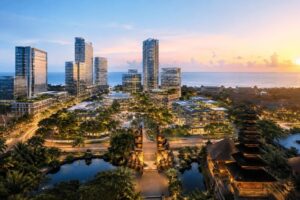

Bali’s Future Is Here: How the Sarbagita Metropolitan Development Plan Is Reshaping the Island
The Sarbagita Metropolitan Development Plan is transforming Bali’s infrastructure, transport, and investment landscape. Encompassing Denpasar, Badung, Gianyar, and Tabanan, this ambitious plan brings modern public transport, urban connectivity, and new development zones to life. For investors, developers, and property seekers, it signals a new era of growth especially in real estate hotspots within the metro’s reach. From the upcoming Bali Urban Subway to sustainable electric BRT corridors, this is your complete guide to how Sarbagita is reshaping the future of Bali.
What Is the Sarbagita Metropolitan Area?
Sarbagita is the name given to the metropolitan area covering:
- Denpasar (SAR)
- Badung (BA)
- Gianyar (GI)
- Tabanan (TA)
Combined, these four regencies represent the socio-economic engine of Bali, hosting more than half of the island’s population and the majority of tourism, education, business, and transportation hubs.
The Sarbagita area has been officially recognized as one of Indonesia’s National Priority Metropolitan Regions—on par with Jabodetabek (Jakarta metro) and Gerbangkertosusila (Surabaya metro).
Why Was the Sarbagita Metro Plan Created?
The plan addresses critical urban issues:
- Uncontrolled urban sprawl
- Increasing traffic congestion
- Over-reliance on tourism
- Lack of affordable housing
- Unequal development across Bali
To balance economic growth with environmental and cultural preservation, the Indonesian government—with international cooperation from Australia and the MCC (Millennium Challenge Corporation)—formulated the Sarbagita Urban Master Plan. It includes zoning updates, sustainable transport strategies, smart city frameworks, and pro-investment land reforms.
The Four Regencies at a Glance
Denpasar:
Bali’s capital city and commercial center. A focal point of education, government, and retail. Infrastructure upgrades will relieve traffic and increase housing demand.
Badung:
Home to the Ngurah Rai International Airport, Seminyak, and Canggu. Major plans include improving coastal resilience, road networks, and MRT connections.
Gianyar:
Cultural heartland of Bali, where Ubud sits. Focused on balancing cultural heritage with smart eco-friendly development.
Tabanan:
A rising destination known for rice terraces and wellness retreats. Will benefit from connectivity projects and zoning for green real estate developments.
Key Projects Under the Sarbagita Development Plan
Some of the most exciting features include:
| Project | Description |
|---|---|
| Trans Sarbagita BRT | 13 planned corridors, 4 active lines, 50+ bus stops |
| eBRT (Electric Bus) | Fully electric corridors funded via international grants |
| Bali MRT (Urban Subway) | High-capacity underground/overground train connecting airport, Denpasar, Sanur |
| Smart Traffic Systems | AI-powered traffic lights, surveillance, parking |
| Affordable Housing Zones | New zoning in Tabanan, Denpasar outskirts |
| Green Mobility Hubs | Park-and-ride facilities, EV charging points |
Trans Sarbagita: Bali’s First Step into Mass Transit
Launched in 2011, Trans Sarbagita is the backbone of Bali’s public transport reform. The system is based on Bus Rapid Transit (BRT) and designed to link major urban and tourism zones.
Highlights:
- Buses every 15–30 minutes
- AC coaches with onboard ticketing
- Main corridors: Batubulan–Nusa Dua, Denpasar–Kuta
- Expanding into Gianyar and Tabanan soon
BRT terminals are also being reimagined as mixed-use mini-hubs, integrating F&B outlets, co-working spaces, and transit hotels.
Bali Urban Subway (MRT Bali): Launching 2028–2031

This project will be a game-changer for Bali’s urban transport.
Phase 1 (Under Construction):
- Airport (Ngurah Rai) → Central Denpasar → Sanur Beach
- Targeted for operation by 2031
- Features underground and elevated tracks
Future Phases:
- Extensions to Ubud, Kuta, and possibly North Bali
- Potential monorail link to tourist hotspots like Canggu or Uluwatu
It’s expected to reduce vehicle congestion on key arteries by 60% once operational.
The New Economic Corridors
As part of Sarbagita, Bali is being re-zoned into Transit-Oriented Development (TOD) corridors:
- Sanur–Denpasar–Sempidi corridor
- Batubulan–Gianyar–Ubud corridor
- Kuta–Canggu–Tabanan corridor
These zones will be prioritized for:
- Mid-rise mixed-use developments
- New residential complexes
- Digital nomad & tourism-friendly co-living spaces
For real estate developers, this unlocks high-density building permits and better infrastructure support.
Impact on Real Estate and Property Values
Real estate demand in Sarbagita is projected to increase sharply over the next 5–10 years, especially in:
- Denpasar suburbs
- Gianyar’s south-western corridor
- Tabanan’s south coast near Mengwi
Key trends:
- Increased land values near new transit lines
- Boom in apartment developments
- Rise of affordable housing projects
- Government incentives for green and mixed-use projects
Foreigners investing via leasehold or under PT PMA structures are already positioning themselves ahead of the curve.
Opportunities for Investors
Here’s why Sarbagita is a rare window of opportunity:
Residential:
- Low-to-mid cost housing for Balinese families
- Premium expat enclaves near transit hubs
Commercial:
- Co-working hubs
- F&B chains near MRT/BRT terminals
Hospitality:
- Transit hotels in key nodes
- Short-stay rentals along the MRT line
Eco-investments:
- EV infrastructure
- Green-certified buildings
With strong government backing, streamlined permits, and international financing, Sarbagita projects carry lower long-term risk.
Green Urbanism: A Sustainable Vision for Bali
Sarbagita isn’t just about transport it’s a complete sustainability framework:
- Smart water and waste systems
- Solar-powered transit shelters
- Ban on new high-rises in eco-sensitive zones
- EV-only zones by 2035
This approach blends traditional Balinese philosophy (Tri Hita Karana) with modern green innovation preserving culture while driving progress.
How This Impacts Tourism, Logistics & Daily Life
Tourists will find it easier to move across the island without depending on Grab or scooters.
Logistics firms will benefit from faster intercity movement and centralized hubs.
Residents will enjoy:
- Shorter commutes
- More affordable housing
- Better quality of life with greener spaces
It also supports long-term resilience for Bali’s economy—less reliant on mass tourism and more diversified.
What It Means for Bali’s East & North-East Areas
Though not directly within Sarbagita, East Bali (like Seraya, Candidasa) and North-East (Amed, Tejakula) will benefit through:
- Feeder transport systems
- Secondary logistics support
- Tourism spillover
As the core metro densifies, investors and developers are already eyeing Seraya, Amed, and Tulamben as Bali’s next frontier for boutique resorts and wellness communities.
Bali’s Bold Step Into the Future
The Sarbagita Metropolitan Development Plan marks a turning point in Bali’s story. From a tourism-dependent paradise to a resilient, smart, and connected island, this vision merges ancient values with future-ready solutions.
For developers, investors, residents, and lovers of Bali—the time to act is now.
Whether you’re planning to invest in property, develop green projects, or just understand the changing map of Bali, Sarbagita will define the island’s future for decades to come.