Understanding Bali’s Unique Building Architecture Requirements Before You Build
Many people assume that building design regulations are identical throughout Bali. In reality, while the island follows broad architectural principles aimed at preserving Balinese culture and identity, each regency and municipality may interpret and apply these guidelines differently. If you’re planning to build a villa, hotel, commercial property, or private residence in Bali, understanding roof design regulations can save significant time, money, and frustration during the approval process.
Why Does Bali Regulate Building Design?
Bali is unlike most destinations in Indonesia.
While rapid development has transformed many parts of the island over the past few decades, Bali has made a conscious effort to preserve the visual and cultural identity that attracts millions of visitors each year.
One of the most effective ways to protect that identity is through architecture.
Imagine if Bali became filled entirely with glass skyscrapers, concrete towers, and generic urban buildings that could exist anywhere in the world. Much of the island’s unique character would gradually disappear.
For this reason, local governments, traditional villages, and provincial authorities have long encouraged architectural styles that reflect Balinese culture while still allowing for modern development and investment.
The goal is simple:
- Preserve cultural identity
- Support economic growth
- Encourage tourism
- Maintain visual harmony
- Protect Bali’s long-term appeal
Architecture sits at the center of all these objectives.
The Cultural Meaning of Roof Design in Balinese Architecture
In traditional Balinese culture, buildings are far more than physical structures.
Architecture is deeply connected to philosophy, spirituality, and harmony with nature.
Traditional concepts such as:
- Tri Hita Karana
- Asta Kosala Kosali
- Traditional Balinese spatial planning
continue to influence modern building design throughout the island.
The roof is often considered one of the most important elements of a building because it symbolizes protection, shelter, and the connection between people, nature, and the spiritual world.
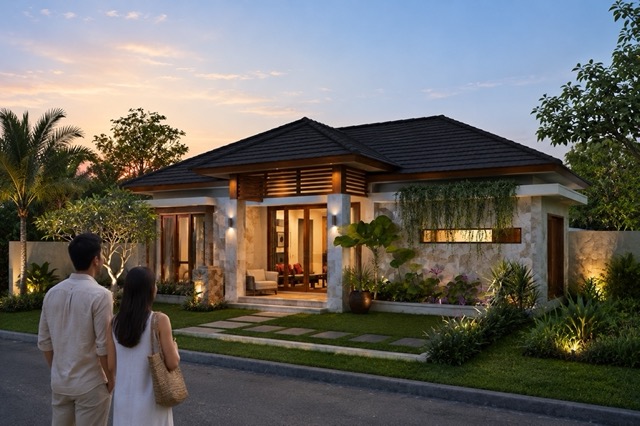
Traditional Balinese roofs typically feature:
- Steep roof pitches
- Wide overhangs
- Natural materials
- Tropical climate adaptation
- Harmonious proportions
These design principles evolved over centuries and remain highly effective in Bali’s tropical environment.
What Is an Overhang and Why Is It Important?
One architectural term frequently mentioned during the design and approval process is overhang.
An overhang refers to the portion of the roof that extends beyond the building walls.
In tropical climates like Bali, overhangs provide several important benefits:
Protection from Rain
Bali experiences significant rainfall during the wet season. Wider roof overhangs help protect walls, windows, and outdoor spaces from direct exposure.
Reduced Heat Gain
Overhangs create shade, reducing the amount of direct sunlight entering the building and lowering indoor temperatures.
Better Energy Efficiency
Buildings with properly designed overhangs often require less air conditioning, reducing energy consumption.
Traditional Aesthetics
Wide overhangs are a characteristic feature of traditional Balinese architecture and contribute to the island’s recognizable architectural identity.
What Is a Building Façade?
Another term often used in building regulations is façade.
The façade is essentially the face of the building, the exterior appearance visible from the street or public spaces.
A building’s façade may include:
- Roof design
- Entrance features
- Windows
- Balconies
- Wall materials
- Decorative elements
- Colors
- Landscaping integration
When authorities discuss maintaining a “Balinese architectural character,” they are often referring to the overall façade rather than a single design feature.
Are Roof Design Regulations Mandatory?
The answer is both yes and no.
Bali generally encourages architectural elements that reflect local identity.
However, modern buildings are not automatically prohibited.
Current regulations typically focus on:
- Roof forms
- Building height
- Visual harmony
- Cultural integration
- Environmental suitability
- Streetscape appearance
Modern villas, hotels, and commercial buildings can often be approved if they successfully integrate elements that respect the surrounding environment and local architectural character.
Are the Regulations the Same Across Bali?
This is where many investors become confused.
Although all regions generally support the preservation of Balinese identity, implementation varies significantly between regencies and municipalities.
Different local governments may have:
- Different planning priorities
- Different zoning regulations
- Different architectural guidelines
- Different tourism strategies
- Different approval processes
As a result, a design that is accepted in one area may require modifications in another.
Denpasar: Balancing Modern Growth and Cultural Identity
As Bali’s capital city, Denpasar experiences intense urban development.
The city generally allows more contemporary architectural styles than some rural regions.
However, Balinese influences are still often encouraged through:
- Roof design
- Façade treatments
- Entrance elements
- Decorative features
- Building proportions
Many commercial buildings in Denpasar successfully blend modern functionality with traditional aesthetics.
Badung: Architecture in Bali’s Tourism Hub
Badung Regency contains some of Bali’s most famous tourism destinations, including:
- Seminyak
- Canggu
- Jimbaran
- Nusa Dua
- Kuta
Because tourism is the region’s primary economic driver, visual appeal plays a critical role in planning decisions.
Developers frequently discover that local authorities pay close attention to:
- Building appearance
- Streetscape impact
- Tourism character
- Architectural harmony
Although contemporary villa designs are common, incorporating Balinese elements often helps projects fit more naturally within the local environment.
Gianyar: Protecting Bali’s Cultural Heart
Gianyar, particularly Ubud, is widely regarded as Bali’s cultural center.
Visitors come to this area specifically to experience traditional Balinese art, culture, and architecture.
As a result, local authorities often place greater emphasis on preserving cultural authenticity.
Architectural designs that reflect Balinese traditions frequently receive stronger community support because they help maintain the area’s unique identity.
Tabanan: Architecture and Natural Landscapes
Tabanan is famous for its rice terraces, rural scenery, and agricultural landscapes.
In many parts of the regency, development policies aim to preserve the visual relationship between buildings and nature.
Designs that blend naturally into the landscape are often preferred over highly urbanized architectural styles.
This approach helps maintain the region’s appeal for both residents and visitors.
Buleleng, Karangasem, Bangli, and Jembrana
These regencies each have distinct geographical and cultural characteristics.
Development patterns differ significantly from southern Bali.
Although local requirements vary, the underlying objective remains consistent:
To encourage growth while preserving the island’s cultural and environmental identity.
Investors should always verify local regulations before finalizing building plans.
Can You Build a Flat Roof Villa in Bali?
This is one of the most common questions asked by developers and foreign investors.
The answer depends on several factors:
- Location
- Zoning
- Building use
- Local government policies
- Design integration
Flat roof designs have become increasingly popular in modern luxury villas.
Many feature:
- Rooftop terraces
- Infinity pools
- Sky lounges
- Contemporary minimalist aesthetics
However, projects often achieve greater approval success when modern architecture is blended with tropical and Balinese design elements rather than completely ignoring local context.
Common Mistakes Investors Make
Many investors arrive in Bali with design concepts inspired by cities such as:
- Dubai
- Singapore
- Sydney
- Los Angeles
They often assume these designs can be directly applied without modification.
Unfortunately, this can create delays and unexpected costs.
Ignoring Local Planning Rules
Each region may interpret regulations differently.
Not Consulting Local Architects
Experienced local professionals understand approval processes and design expectations.
Focusing Only on Global Trends
What works in another country may not fit Bali’s climate, culture, or planning objectives.
Making Major Design Changes Midway
Significant revisions during the approval process can create delays and additional expenses.
Roof Design as a Property Value Booster
Many people view architectural regulations as restrictions.
However, there is another way to look at them.
Balinese architectural elements can actually increase property value.
Why?
Because visitors and international buyers come to Bali seeking something unique.
They are attracted by:
- Tropical living
- Cultural authenticity
- Architectural character
- Lifestyle experiences
A villa that looks identical to a suburban home elsewhere in the world may struggle to create a strong emotional connection.
On the other hand, properties that successfully combine:
- Modern comfort
- International standards
- Tropical design
- Balinese architectural influences
often stand out in the marketplace.
For many buyers, this combination creates a more memorable and desirable investment.
The Future of Balinese Architecture
The future challenge for Bali is not choosing between traditional and modern architecture.
Instead, it is finding the right balance between:
- Cultural preservation
- Sustainable development
- Technology
- Investment growth
- Environmental responsibility
Emerging trends include:
- Eco-resorts
- Sustainable villas
- Green buildings
- Passive cooling systems
- Environmentally friendly materials
Interestingly, many of these modern sustainability principles closely align with traditional Balinese architectural wisdom, which has emphasized harmony with nature for centuries.
The future of Bali’s architecture will likely be defined by intelligent integration rather than strict separation between traditional and contemporary design.
So, are roof design regulations the same across every regency in Bali?
The short answer is no.
While all regions generally share the goal of preserving Bali’s cultural identity and visual character, individual regencies and municipalities may apply different technical requirements, planning priorities, and architectural interpretations.
For investors, developers, and property owners, the safest approach is to consult local professionals, verify regional regulations, and design buildings that respect both modern needs and local character.
Ultimately, Bali’s roof design guidelines are about much more than aesthetics or permits. They represent an ongoing effort to preserve what makes Bali unique while ensuring that future development continues to support the island’s long-term cultural, environmental, and economic success.