The Small Problem Quietly Making Property Buyers Hesitate
Bali’s tangled electricity and internet cables are no longer just a visual annoyance. For property buyers, investors, and even tourists, messy utility infrastructure has quietly become a hidden red flag. From lowering the perceived value of villas to affecting Bali’s image as a premium destination, chaotic overhead cables are now part of the conversation around Bali’s future infrastructure and real estate market.
Bali’s Tangled Utility Cables: A Growing Concern for Property Buyers
Bali has long been known for its stunning landscapes, rich culture, tropical lifestyle, and world-class tourism appeal. But behind the beautiful rice fields, modern villas, trendy cafés, and luxury resorts, there is one issue that many people notice yet rarely discuss openly: messy electrical and internet cables.
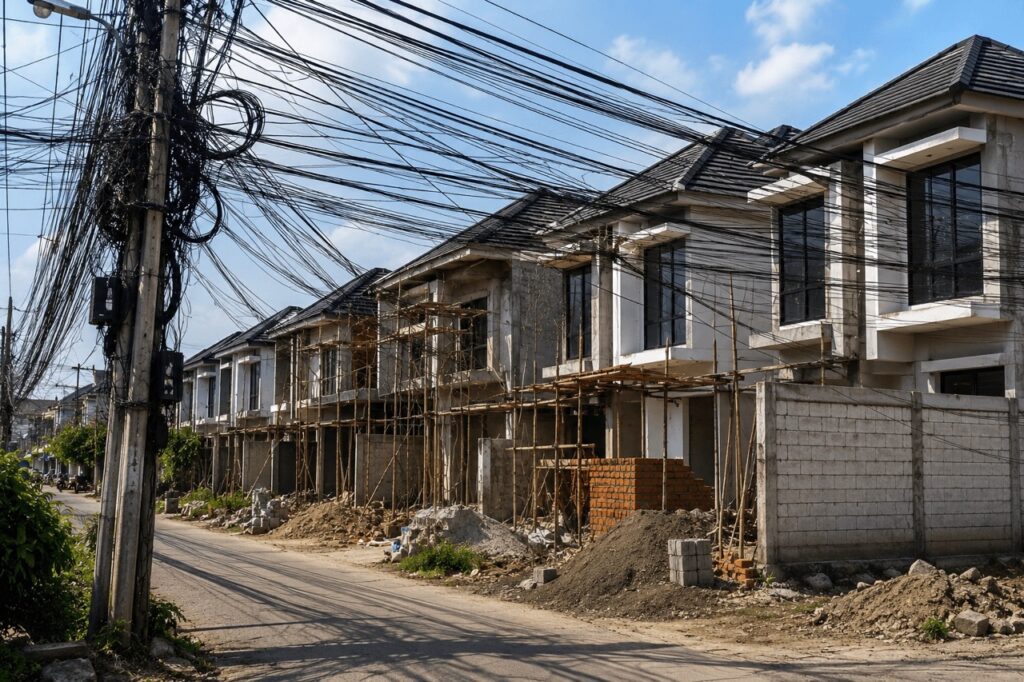
Power poles overloaded with tangled wires. Internet cables hanging low in front of villas. Fiber optic lines crossing each other without proper organization. In some areas, even premium neighborhoods are starting to look visually chaotic.
For many property buyers today, especially foreign investors and international remote workers, infrastructure quality has become part of the buying decision.
And surprisingly, the more expensive the property becomes, the more sensitive buyers are to these details.
Years ago, most buyers focused mainly on:
- ocean views,
- rice field scenery,
- beach access,
- or tourism potential.
Today, buyers also pay attention to:
- road quality,
- drainage systems,
- internet stability,
- electrical reliability,
- neighborhood organization,
- and even how clean the utility infrastructure looks.
Messy cables have slowly become a symbol of an area growing too fast without enough infrastructure planning.
Why Messy Cables Have Become a Buyer Pain Point
Many developers and landowners still see tangled cables as a minor issue. But from a buyer psychology perspective, visual infrastructure strongly affects perceived property value.
Imagine two villas:
- The first villa has beautiful architecture, but is surrounded by hanging cables.
- The second villa is slightly simpler but located in a cleaner, more organised environment.
In many cases, buyers are naturally drawn toward the second option.
Because modern buyers are not just purchasing a building.
They are buying:
- lifestyle,
- atmosphere,
- comfort,
- visual experience,
- and long-term confidence.
Messy utility cables often create the impression that:
- the area is overdeveloped,
- infrastructure is poorly managed,
- utilities were added without planning,
- and the neighbourhood lacks proper maintenance.
These small visual details can directly influence:
- resale value,
- rental attractiveness,
- social media appeal,
- and even final purchasing decisions.
Bali Is Growing Faster Than Its Infrastructure
One of the biggest reasons behind Bali’s cable problem is the speed of development.
Over the last several years, areas such as:
- Canggu,
- Uluwatu,
- Pererenan,
- Berawa,
- Seseh,
- Gianyar,
- and Tabanan
have experienced massive construction growth.
New villas, cafés, restaurants, coworking spaces, resorts, and commercial buildings continue to appear rapidly.
The problem is that every new project requires:
- electricity,
- internet,
- CCTV systems,
- fiber optic connections,
- and additional utilities.
As a result, utility providers often install new cables quickly without a long-term infrastructure strategy.
Over time:
- old cables are rarely removed,
- new cables continue to pile up,
- utility poles become overloaded,
- and premium neighbourhoods slowly lose their clean visual appeal.
Infrastructure Is More Than Roads and Airports
When people talk about Bali’s infrastructure, they usually think about:
- traffic congestion,
- roads,
- airports,
- ports,
- and transportation.
But visual infrastructure is equally important.
Globally recognised premium destinations pay close attention to:
- utility organisation,
- underground cable systems,
- street lighting,
- signage,
- and urban aesthetics.
Why?
Because visual order affects:
- quality of life,
- tourism experience,
- city branding,
- and real estate value.
Bali is increasingly positioning itself as a premium international destination.
But premium buyers also come with premium expectations.
Many international investors compare Bali with destinations like:
- Phuket,
- Dubai,
- Singapore,
- Koh Samui,
- and luxury resort towns in Europe.
When they see million-dollar villas sitting beneath chaotic utility wires, it naturally raises questions about infrastructure readiness.
The Hidden Impact on Property Value
Many people underestimate how strongly neighbourhood appearance influences property pricing.
In real estate, there is a concept called “perceived value.”
This means a property’s value is not determined only by:
- land size,
- building quality,
- or location.
It is also shaped by how buyers emotionally perceive the surrounding environment.
Messy cables can reduce:
- exclusivity,
- visual cleanliness,
- online marketing appeal,
- and overall luxury perception.
This matters even more today because most buyers first discover properties through:
- Instagram,
- TikTok,
- YouTube,
- or property marketplaces.
Drone footage filled with hanging cables immediately reduces visual impact.
Some luxury villa owners even:
- edit cables out of marketing photos,
- carefully choose camera angles,
- or plant trees simply to hide utility poles.
That alone shows how real the issue has become.
Modern Buyers Are Far More Critical
Property buyers in Bali today are much more informed than they were 5–10 years ago.
Many buyers now carefully analyse:
- infrastructure quality,
- utility stability,
- internet performance,
- neighborhood planning,
- and long-term sustainability.
This is especially true for:
- foreign investors,
- digital nomads,
- remote business owners,
- and luxury lifestyle buyers.
They often ask:
- Is the electricity reliable?
- Are blackouts common?
- Is the internet stable?
- Are the cables safe?
- Does the area feel overcrowded?
- Will infrastructure improve over time?
These questions were once considered secondary.
Now they are part of serious property due diligence.
Bali Sells Visual Experience
Bali’s economy is heavily driven by aesthetics and atmosphere.
People come to Bali for:
- beautiful scenery,
- tropical architecture,
- sunset views,
- jungle villas,
- rice terraces,
- and lifestyle experiences.
Visual appeal is one of Bali’s strongest assets.
That is why messy utility cables are not just a technical problem.
They are also a tourism branding issue.
Take a look at most viral Bali content online:
- aesthetic cafés,
- tropical resorts,
- luxury villas,
- scenic roads,
- and ocean sunsets.
Visual storytelling drives Bali’s tourism industry.
But when major tourism areas are filled with tangled cables, the overall experience slowly loses its premium feeling.
Tourists may not openly complain about it.
However, visually cluttered environments subconsciously affect how people perceive destination quality.
Why Underground Utilities Are Still Limited
A common question people ask is:
“Why doesn’t Bali simply move utilities underground?”
The answer is more complicated than it sounds.
Underground utility systems require:
- very large budgets,
- coordinated planning,
- road reconstruction,
- long-term maintenance,
- and cooperation between multiple providers.
In many parts of Bali, development happened so quickly that utility installation became reactive rather than strategic.
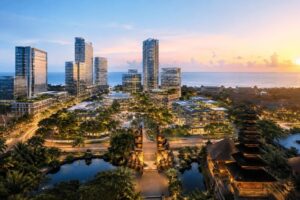
However, some premium developments are starting to move in this direction.
Larger developers are now considering:
- underground cable systems,
- integrated infrastructure planning,
- hidden utility corridors,
- and master-planned communities.
Why?
Because premium buyers increasingly care about environmental quality and aesthetics.
Organised Areas Will Likely Become More Valuable
In the future, areas with cleaner infrastructure and better planning may gain significantly stronger market value.
Not only because of location —
but because of the overall neighbourhood quality.
Areas with:
- organised utilities,
- clean roads,
- proper drainage,
- stable internet,
- and visually cleaner streets
will naturally feel more premium.
Even if land prices start at similar levels, well-organised neighbourhoods often become more desirable over time.
This trend is already visible in some newer developments that focus heavily on:
- infrastructure quality,
- sustainability,
- and visual order.
Buyers are increasingly willing to pay more for environments that feel:
- comfortable,
- modern,
- clean,
- and professionally managed.
Developers Are Starting to Sell Infrastructure Quality
In the past, many developers focused mainly on:
- villa design,
- rooftop areas,
- swimming pools,
- and bedroom count.
Today, buyers are paying much closer attention to:
- access roads,
- utilities,
- environmental organisation,
- and long-term livability.
As a result, serious developers are beginning to market infrastructure itself as a premium feature.
They now promote:
- underground utilities,
- organised fibre optic systems,
- modern electrical planning,
- better drainage,
- and cleaner neighbourhood concepts.
This is no longer just about aesthetics.
It has become part of the property’s long-term value proposition.
The Safety Risks Nobody Talks About
Beyond aesthetics, messy utility cables can also create safety concerns.
Potential risks include:
- overloaded utility poles,
- unsafe cable connections,
- electrical short circuits,
- low-hanging wires,
- and disruptions during storms or heavy rain.
In rapidly growing areas, utility maintenance becomes increasingly difficult.
Experienced property buyers now consider:
- electrical reliability,
- maintenance access,
- internet performance,
- and operational stability.
For villa rental businesses, even a short internet or electricity outage can directly impact guest reviews and revenue.
Bali Is Entering an Important Infrastructure Phase
Bali is currently going through a major transition.
The island is no longer viewed only as a budget tourism destination.
It is evolving into:
- a luxury tourism hub,
- a remote working destination,
- a wellness capital,
- and an international property market.
But this transformation also requires stronger infrastructure standards.
Global buyers no longer look only at:
- views,
- ROI,
- and tourism demand.
They also evaluate:
- neighborhood planning,
- infrastructure quality,
- sustainability,
- and urban management.
Messy cables may seem like a small issue.
But they often reflect deeper questions about how an area is developing.
What Property Buyers Should Pay Attention To
If you are planning to buy property in Bali, do not focus only on the building itself.
Pay attention to:
- utility conditions,
- internet reliability,
- cable organisation,
- electrical stability,
- road quality,
- neighborhood density,
- and future infrastructure development.
Because the surrounding infrastructure will directly affect:
- comfort,
- resale value,
- rental performance,
- and long-term investment security.
Sometimes, a slightly more expensive property in a cleaner, more organised area can become a much safer investment over time.
Bali Still Has Enormous Potential
Despite these infrastructure challenges, Bali remains one of the world’s most attractive property and tourism markets.
The island still offers:
- strong international demand,
- powerful global branding,
- growing tourism,
- and active real estate opportunities.
However, the market is becoming more mature.
Today’s buyers are no longer purchasing only the dream of Bali.
They are also evaluating the long-term quality of the environment itself.
And in today’s market, infrastructure is no longer a small detail.
It has become a major part of investment confidence.
Messy electrical and internet cables may seem like an ordinary problem that people have become used to seeing in Bali. But for modern property buyers and investors, these visual infrastructure issues can quietly influence how an area is perceived.
As Bali continues growing rapidly, infrastructure quality is becoming increasingly important.
Because today’s buyers are not only purchasing buildings,
they are investing in comfort, experience, lifestyle, and long-term value.
In the future, areas with cleaner infrastructure, better planning, and more organised utilities will likely stand out more strongly in Bali’s competitive property market.
For investors, developers, and property owners, understanding these details may become one of the biggest competitive advantages moving forward.