

The Difference Between “Split of Certificate” and “Separate of Certificate” in Bali Property Ownership
Many property owners and investors in Bali get confused between Splitting of Certificate and Separate of Certificate – two legal processes that sound similar but carry completely different implications. This comprehensive guide explains what each term means, when and why you might need them, and how to process the applications properly under Indonesia’s land laws. Whether you’re dividing inherited land, developing a villa complex, or restructuring ownership, understanding this distinction is crucial to protect your investment and ensure smooth transactions.
Split or Separate? Understanding the Real Difference Between “Pisah Sertifikat” and “Pecah Sertifikat” in Bali Property Ownership
In the complex landscape of Bali property ownership, legal clarity is everything. From zoning regulations (peruntukan lahan) to foreign ownership limits, the paperwork behind your dream villa or investment plot can make or break your deal.
One of the most misunderstood processes is the difference between “pisah sertifikat” (separation of certificate) and “pecah sertifikat” (splitting of certificate). While both involve changes to land certificates (sertifikat tanah), they serve different purposes, follow different procedures, and apply in distinct legal contexts.
Let’s unpack this crucial topic step by step – and see why knowing the difference could save you months of delay or even prevent costly legal disputes.
Why This Matters for Bali Property Owners and Investors
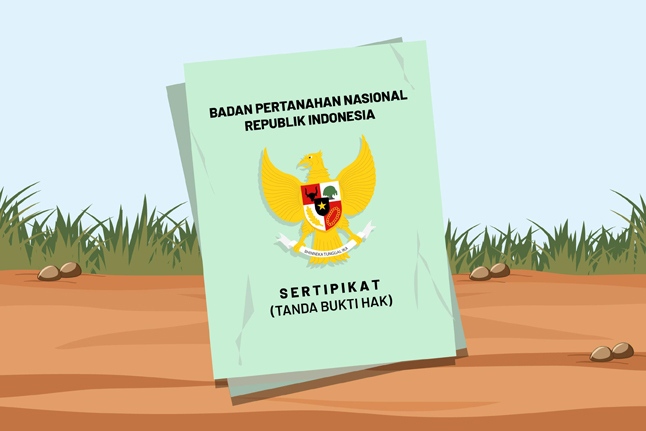
Property development in Bali is booming. Whether it’s a foreign investor through a PT PMA, a local developer building rental villas, or a family dividing inherited land, certificate management is an unavoidable step.
Yet many people walk into the process assuming that pisah sertifikat and pecah sertifikat mean the same thing – they don’t.
- “Pecah sertifikat ( Splitting of Certificate )” applies when one piece of land is legally divided into smaller parcels, each getting its own new certificate.
- “Pisah sertifikat ( Separation of Certificate )”, on the other hand, happens when a jointly-owned or co-registered certificate is separated based on ownership, without changing the land’s physical boundaries.
Confusing the two can lead to processing errors at the National Land Agency (Badan Pertanahan Nasional or BPN), delays in notary verification, or even rejection of your AJB (Deed of Sale and Purchase).
Understanding “Pecah Sertifikat”: The Legal Land Split
The term pecah sertifikat translates to “split certificate.” It’s a process where one land title is divided into several smaller titles, each representing a new, smaller piece of land with its own unique certificate number.
When You Need Pecah Sertifikat
- When selling part of your land to another person.
- When dividing land among heirs after inheritance (warisan).
- When developing a housing complex or villa compound.
- When dividing agricultural land for different business entities or zoning uses.
Legal Requirements
Before starting, the following conditions must be met:
- The land must already have a registered certificate (Hak Milik, Hak Guna Bangunan, or Hak Pakai).
- The land cannot be under dispute or in the process of collateral (jaminan).
- The land must comply with zoning regulations (spatial plan, RTRW).
- The split must respect minimum land size rules – for example, in many parts of Bali, residential plots can’t be smaller than 100 m² depending on zoning.
Step-by-Step Process
- Survey & Measurement by BPN – A land surveyor from BPN measures the intended division.
- Application Submission – Submit an official request with documents like the original certificate, ID card, tax proof, and zoning approval.
- Mapping & Technical Review – BPN updates cadastral maps and checks the zoning compliance.
- New Certificate Issuance – After approval, each new plot receives a separate land certificate.
The entire process may take 1–3 months, depending on the BPN office workload, documentation completeness, and whether there are objections from neighbors.
Understanding “Pisah Sertifikat”: Separation of Shared Ownership
Now let’s look at pisah sertifikat. While pecah sertifikat changes the land’s boundaries, pisah sertifikat changes the ownership status on paper – it separates co-ownership into individual certificates.
When You Need Pisah Sertifikat
- When siblings or family members each want their own name on separate titles.
- When a married couple divorces and decides to divide the jointly-owned property.
- When joint investors separate their ownership interests.
- When a large property co-owned by several parties needs to be legally partitioned.
Key Point: No Physical Division
The land area itself may remain physically the same, but the ownership portions are legally distinguished. Essentially, pisah sertifikat clarifies who owns what portion of the property.
Step-by-Step Process
- Agreement Among Owners – All co-owners must consent to the separation.
- Legal Documentation by Notary/PPAT – A deed of separation (akta pemisahan hak) is made.
- Submission to BPN – The notary or PPAT files an application with supporting documents.
- BPN Verification & Issuance – BPN issues individual certificates under each owner’s name.
This process generally takes around 1–2 months, shorter than pecah sertifikat because there’s no re-measurement involved.
The Cost Factors: What You Should Budget For
Both processes involve administrative costs, but pecah sertifikat is usually more expensive because of:
- Land measurement and mapping fees
- Zoning reapproval if required
- New certificate issuance per parcel
Typical Cost Components
| Description | Pisah Sertifikat | Pecah Sertifikat |
|---|---|---|
| BPN admin fee | Medium | High |
| Land survey fee | Low | High |
| Notary/PPAT fee | Medium | Medium |
| Duration | 1–2 months | 2–3 months |
| Risk of rejection | Low | Moderate |
💡 Tip: Always work through a reputable notary (PPAT) familiar with Bali’s regional zoning and minimum plot size rules to avoid rejection from BPN.
Legal and Practical Implications
Here’s where investors often get caught off guard. The distinction between pisah and pecah affects:
- Who has the right to sell
- Who can lease or mortgage the land
- Tax responsibility (PBB, BPHTB, etc.)
- Future resale value
For instance:
- If you’re co-owning land (sertifikat atas nama bersama), you can’t sell your part independently unless it’s been officially pisah sertifikat.
- If you own a large 2,000 m² lot and plan to sell it in four 500 m² plots, you must do pecah sertifikat first, or no buyer can legally process their certificate.
Common Mistakes in Bali Property Transactions
a. Misunderstanding the Process
Many owners apply for pecah sertifikat when they actually need pisah sertifikat, leading to unnecessary surveys and fees.
b. Overlooking Zoning and Setback Rules
In Bali, not every land can be freely divided. Agricultural (tanah pertanian) or green zone areas are strictly regulated.
c. Ignoring Tax Implications
Land division may trigger capital gains tax (PPh), transfer tax (BPHTB), or changes in PBB liability. Always calculate the fiscal impact before splitting.
d. Not Updating IMB or PBG
If your land already has a building with an IMB (Building Permit), ensure that the permit and land division stay consistent — otherwise, BPN may reject the new certificates.
How the Process Differs for PT PMA or Foreign Investors
Foreign investors operating under a PT PMA (foreign-owned company) often hold land under Hak Guna Bangunan (HGB) or Hak Pakai. Both rights allow splitting (pecah sertifikat) with BPN approval, but not all zoning areas permit it.
- Pisah sertifikat in PT PMA contexts usually refers to internal restructuring or partnership division, handled by notarial agreement.
- Pecah sertifikat for development projects (e.g., villa complexes) requires prior zoning review and land-use approval.
How to Expedite the Process
To keep things smooth and avoid bureaucratic gridlock:
- Prepare all documents in advance: certificate, ID, tax proof, zoning map, IMB (if any).
- Use a local surveyor registered with BPN for the measurement.
- Hire a PPAT who regularly handles Bali property – they can anticipate local issues and fast-track BPN submissions.
- Check the “Peta ZNT” (Land Value Map) to anticipate revaluation fees.
Real-World Scenarios
Case 1: Family Land Division in Canggu
A family owning 10 are (1,000 m²) of land wants to divide it among three siblings. They apply for pecah sertifikat since each sibling will receive a distinct parcel (e.g., 3.3 are each).
Result: Three new Hak Milik certificates, each under an individual name.
Case 2: Divorce Settlement in Denpasar
A married couple co-owning a property under one certificate chooses to separate ownership after divorce. They proceed with pisah sertifikat.
Result: The property remains the same physically, but now two separate certificates reflect individual ownership shares.
Legal References
Both processes are regulated under:
- Peraturan Menteri Agraria dan Tata Ruang / Kepala BPN No. 18 Tahun 2021 (on registration of land rights)
- Peraturan Pemerintah No. 24 Tahun 1997 (on Land Registration)
- Undang-Undang No. 5 Tahun 1960 (UUPA) – Basic Agrarian Law
New Digital Angle: BPN Online Services (ATR/BPN Go-Digital)
Since 2023, many BPN offices in Bali have adopted digital registration systems. The pecah sertifikat and pisah sertifikat processes can now be initiated online through https://atrbpn.go.id or the Sentuh Tanahku mobile app.
Advantages:
- Faster submission tracking.
- Transparent cost breakdowns.
- Reduced physical visits and documentation loss.
However, final verification and certificate collection still require an in-person appointment.
Strategic Uses for Property Investors
Knowing when to use pisah sertifikat or pecah sertifikat can become a strategic advantage for investors.
- Developers use pecah sertifikat to create multiple resale plots within one master land title.
- Families use pisah sertifikat to simplify inheritance management and prevent future disputes.
- Joint venture investors use pisah sertifikat to clarify profit-sharing and ownership ratios.
If done correctly, these processes don’t just tidy up paperwork – they increase liquidity, transparency, and resale value of your property portfolio.
The difference between pisah sertifikat and pecah sertifikat may sound technical, but it can define whether your next property transaction in Bali goes smoothly or hits a legal wall.
In an island where property values are surging and land use rules are tightening, understanding these legal nuances is not just smart — it’s essential.
Whether you’re managing family assets, planning a villa project, or investing through a PT PMA, always align with the right notary and confirm your strategy with BPN before starting the process.
Because in Bali’s property world, clarity on paper equals security in reality.