KLB and KDB in Bali Property: The Complete Guide to Floor Area Ratio and Building Coverage for Smarter Investments
In Bali’s property market, KLB (Floor Area Ratio) and KDB (Building Coverage Ratio) define the very limits of what you can build. These regulations shape how much of your land can be covered by buildings, how many floors you can construct, and ultimately how valuable your property investment becomes. With strict zoning rules, cultural height limits, and a growing focus on eco-friendly design, understanding KLB and KDB is essential for anyone planning to buy, build, or invest in Bali real estate. This guide explains the details, practical examples, and investment insights you need to make smarter property decisions in Bali.
When it comes to property development in Bali, two little acronyms hold enormous power: KLB (Koefisien Lantai Bangunan or Floor Area Ratio) and KDB (Koefisien Dasar Bangunan or Building Coverage Ratio). These terms may sound technical, but for investors, developers, and landowners, they are the blueprint behind your project’s potential.
In Bali, where zoning is strict, building heights are capped, and harmony with the environment is a cultural obligation, KLB and KDB determine whether your plot of land becomes a luxury villa, a boutique resort, a co-living space, or just a modest residence.
This article breaks down what KLB and KDB mean, how they work in Bali’s regulatory context, why they matter for property values and returns, and how forward-thinking investors can use them strategically , not just to maximize profits but also to align with sustainability and Balinese culture.
What is KDB (Building Coverage Ratio)?
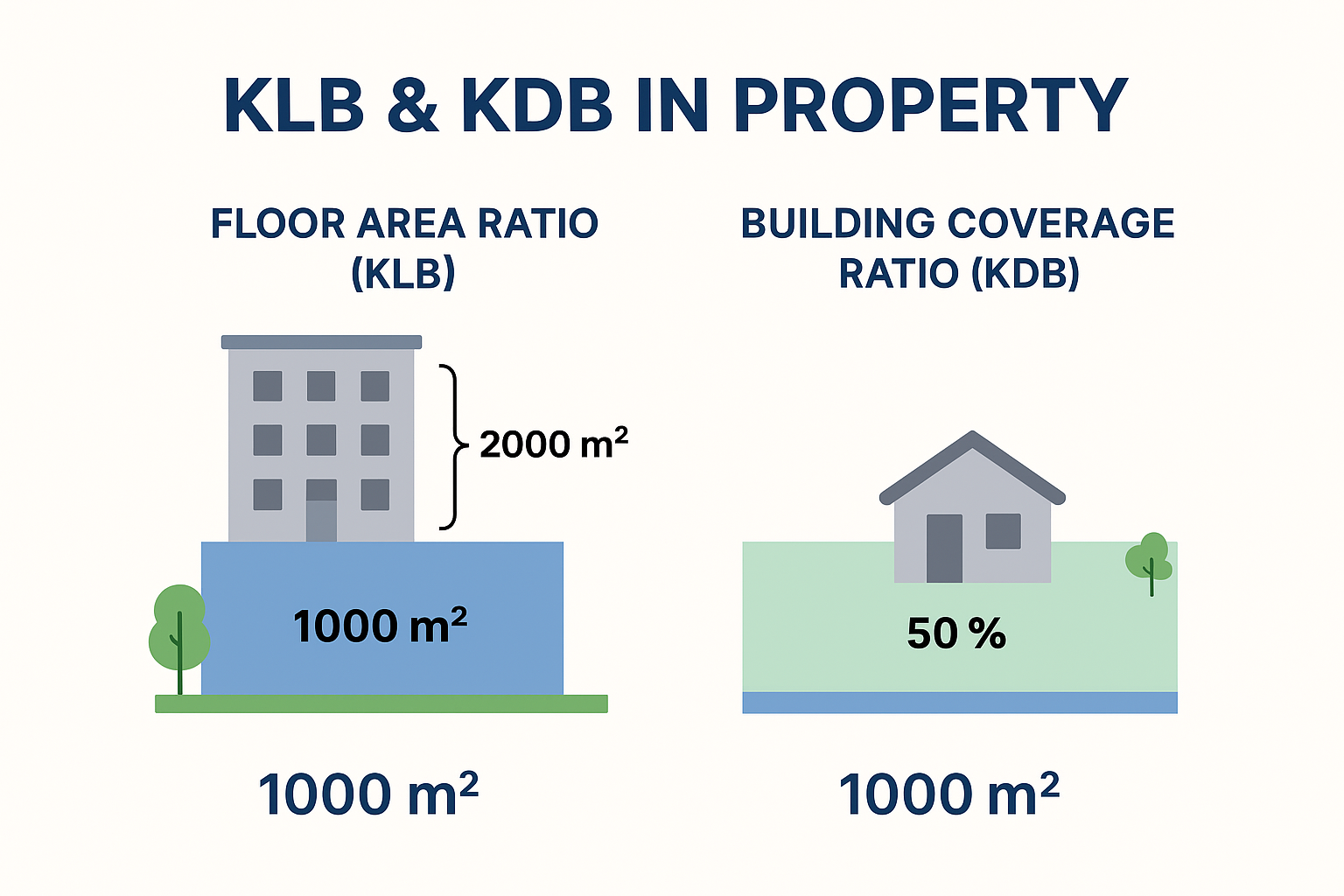
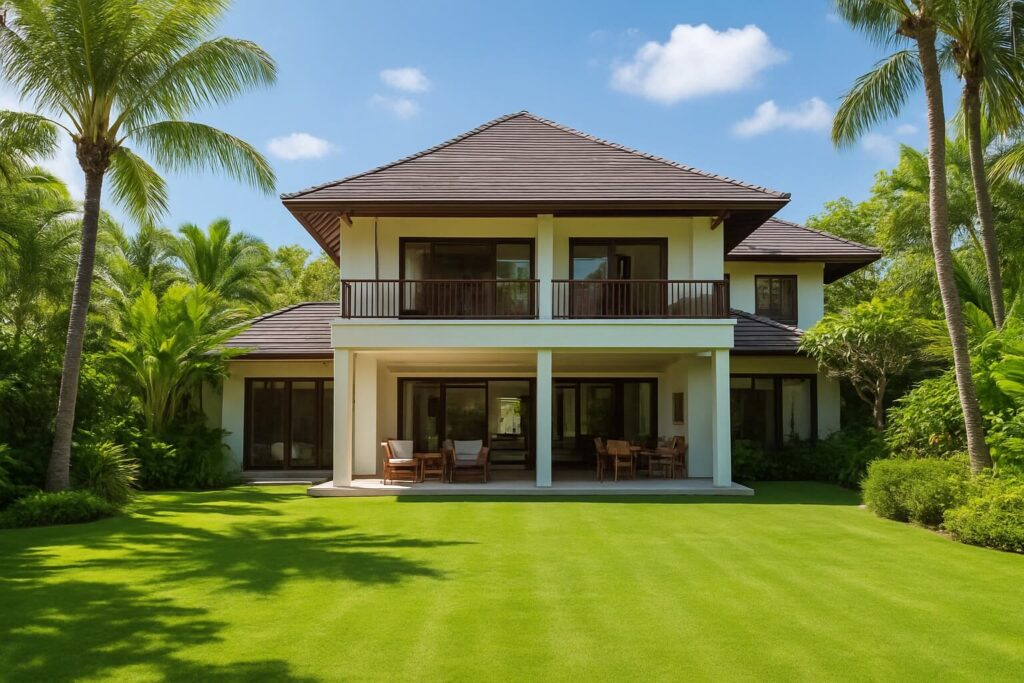
KDB regulates how much of your land can be covered by the footprint of a building.
- Example: On a 1,000 m² plot with KDB of 60%, you can cover 600 m² with a building. The remaining 400 m² must stay open for greenery, parking, or water absorption.
Why KDB matters:
- Keeps neighborhoods from being overbuilt.
- Preserves green areas and water absorption.
- Ensures fairness in urban planning and zoning.
What is KLB (Floor Area Ratio)?
KLB governs how much total floor space you can build relative to your land size.
- Example: A 1,000 m² plot with a KLB of 2.0 allows up to 2,000 m² of total floor area.
- This could be two floors of 1,000 m² each, or four floors of 500 m², depending on height restrictions.
Why KLB matters:
- Determines the intensity of land use.
- Balances land footprint and building height.
- Prevents infrastructure overload in busy areas.
The Connection Between KLB, KDB, and Property in Bali
Bali applies strict spatial planning regulations under the RTRW (Regional Spatial Plan) and RDTR (Detailed Spatial Plan) for each regency.
- KDB in Bali is often lower in tourism-heavy areas such as Ubud, Canggu, or Uluwatu to maintain open space.
- KLB in Bali is carefully restricted to protect views, cultural sites, and natural landscapes. The island famously enforces a height rule: no building may exceed the height of a coconut tree (about 15 meters).
Example case:
- A 1,000 m² plot in Canggu with KDB 50% and KLB 1.5.
- Maximum building footprint: 500 m² (KDB).
- Maximum floor area: 1,500 m² (KLB).
- This could translate into a two-story villa of 750 m² per floor.
Why KLB and KDB Are Crucial for Investors in Bali
- Project feasibility
- Determines whether you can build a 10-room villa or just 4.
- Land valuation
- Plots with higher KLB are more expensive because of their greater potential.
- Legal compliance
- Avoids disputes, fines, or demolition of illegal structures.
- Return on investment (ROI)
- More floors often mean higher income potential, if done within legal limits.
KLB, KDB, and Sustainability
For Bali, overdevelopment is a real risk , flooding, congestion, and cultural erosion can all result from ignoring spatial rules. That’s why modern investors are adding a new layer to their calculations: sustainable design.
- Using green roofs, rainwater harvesting, and landscaped open areas can turn a regulation into a selling point.
- Eco-conscious tourists increasingly prefer accommodations that showcase harmony with nature.
Understanding KLB and KDB is not just about “how high” or “how big” you can build. It’s also about preserving Bali’s character while creating long-term property value.
Comparison Table: KLB vs KDB
| Aspect | KDB (Building Coverage Ratio) | KLB (Floor Area Ratio) |
|---|---|---|
| Definition | % of land area covered by building footprint | Ratio of total floor area to land area |
| Focus | Ground coverage | Vertical floor space |
| Purpose | Ensures open space and water absorption | Regulates development intensity |
| Example (1,000 m² plot) | 60% → 600 m² footprint | 2.0 → 2,000 m² total floorspace |
Quick Takeaways
- KDB limits the footprint of your building on the land.
- KLB dictates how many floors and total square meters you can build.
- Bali’s height rule and zoning laws make both critical to project planning.
- Higher KLB usually means higher land value.
- Ignoring KLB/KDB can lead to fines or demolition.
- Sustainable projects benefit both ROI and Bali’s environment.
At the heart of property investment in Bali lies a simple truth: KLB and KDB are the codes that shape your project’s destiny. These ratios decide how much you can build, how tall you can go, and how your investment fits into Bali’s cultural and environmental landscape.
For international investors, understanding KLB and KDB is not just a technical exercise. It’s about making informed decisions that are profitable, legally sound, and respectful of Bali’s unique identity.
As the Balinese saying goes, desa kala patra , everything should be in harmony with place, time, and circumstance. In property terms, this means building within KLB and KDB, balancing ambition with responsibility, and ensuring your villa, resort, or co-living space thrives in Bali for years to come.