
Bali’s property investment landscape is shifting – investors are now looking beyond Canggu and Seminyak to find the island’s next growth zones. From the north coast’s new airport-driven boom to east Bali’s quieter coastline and the fringes of Canggu like Pererenan and Tumbak Bayuh, these emerging areas offer lower entry prices, infrastructure momentum and lifestyle-led appeal. With smart criteria – accessibility, amenities, rental demand, and micro-location – you can spot high-potential opportunities for the 2025–2027 investment window.
In recent years, Bali’s real-estate narrative has largely revolved around the usual suspects such as Canggu and Seminyak – areas now widely recognised, heavily marketed and increasingly saturated. Yet for the period 2025–2027 there lies a compelling opportunity in emerging zones of the island: locations that combine infrastructure uplift, growing demand, and still-affordable entry prices. In this article we explore these “new frontiers”, highlight specific areas – such as north Bali, east Bali, and the fringes of Canggu (think Pererenan/Tumbak Bayuh), and compare them to the mature hotspots. We’ll also provide practical tips for identifying and choosing locations wisely (accessibility, facilities, rental potential, saturation risk). This is your relaxed, easy-to-read guide to unlocking the next wave of property investment in Bali.
Why the Shift? From Saturated South to Emerging Zones
The mature hotspots and their limits
As property investors know, Canggu and Seminyak have been the go-to markets for Bali investment for about a decade now. They benefit from strong tourism demand, digital-nomad influx, and high rental yields. A recent guide suggests that in spots like Canggu and Seminyak yields of 10-16% annually are feasible in short-term holiday rentals.
However, the flipside is that these areas are showing signs of saturation: soaring land and villa prices, global investor competition, traffic congestion, environmental pressure and regulatory wrangling. In fact, Bali is starting to impose stricter rules around commercial development in certain zones.
Why “emerging zones” matter now
The investment logic for shifting focus to less-crowded areas is strong:
- Lower entry costs mean less upfront capital and potentially higher upside in value appreciation as the area develops.
- Infrastructure upgrades (roads, transport hubs, digital infrastructure) in new districts can trigger uplift. For example, the proposed new airport in north Bali is cited as a strategic catalyst for future growth.
- Demand from segments like longer-stay remote workers, experience-seekers and eco-tourists is rising, and they may prefer newer, less crowded destinations with a ‘genuine’ feel.
- Less competition means you may benefit from “first mover” advantage rather than being one among many in an overcrowded zone.
The risks to balance
Of course, emerging zones bring additional risk: slower rental turnover, potentially patchy infrastructure, regulatory uncertainty, and longer time-horizons for value uplift. The key is to pick zones with real momentum – not simply “remote” for the sake of it.
Spotlight Zones: Bali’s Up-and-Coming Investment Areas 2025-2027
Let’s dive into specific zones in Bali that merit attention, especially for the 2025-2027 timeframe.
North Bali (e.g., Buleleng, Kubutambahan)

Why it stands out:
- The planned North Bali International Airport (NBIA) in Buleleng Regency is flagged as a game-changer: one runway targeted for 2028, and full aerocity/urban-growth plans around it.
- Less developed than south Bali means more headroom for growth. A recent article emphasizes North Bali as “the next property hotspot”.
- Entry-level prices are still relatively affordable compared to the south.
- The “novelty factor” appeals to investors targeting long-term capital appreciation and niche rental markets (eco-tourism, nature retreats).
Key considerations:
- Time horizon matters: infrastructure may take years to fully deliver.
- Access and connectivity today may lag (roads, services).
- Make sure the micro-location is near emerging amenities, not simply remote.
East Bali (e.g., Karangasem, Amlapura region)
Why it stands out:
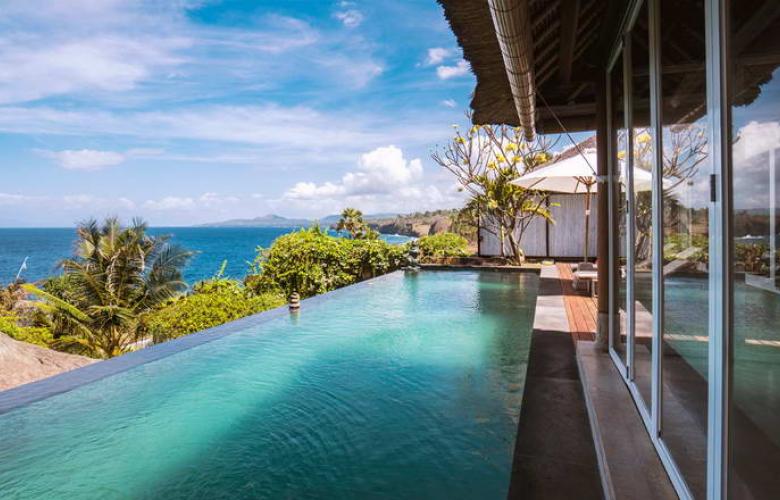
- While less written about than the south or even the north, east Bali offers untapped coastline, cultural authenticity, slower-paced tourism and potential for growth.
- Some investor guides identify east Bali among the top 10 areas for investment in 2025.
- As the popular south becomes crowded, some tourists and long-stay visitors may seek new zones offering ‘something different’.
Key considerations:
- Infrastructure (airport links, roads) may still be less advanced than the south.
- Rental demand may take longer to build compared to established tourist hubs.
- You’ll want to look at access to amenities (supermarkets, healthcare, schools) if targeting long-stay/expat market.
Fringes of South Bali – Pererenan & Tumbak Bayuh (near Canggu)
Why it stands out:
- These zones are positioned between the highly-mature Canggu and new emerging pockets. They benefit from relative proximity to amenities and lifestyle attractions, yet may still have value headroom.
- Being near the popular Canggu surfing and digital-nomad scene provides appeal, while being slightly off the main blow of price inflation.
- Some investor commentaries hint at “next ring” zones around Canggu being high-potential.
Key considerations:
- Because they are adjacent to a hot zone, competition and development may ramp quickly—so choose carefully.
- Traffic and congestion may already be non-trivial, given Canggu’s issues, so accessibility is key.
- Rental yields may still be high—but you’ll need to monitor supply growth (many villas being built) and saturation risk.
Quiet coastal villages such as Seseh
Why it stands out:
- According to recent commentary, Seseh is gaining traction: it’s close to Canggu yet quieter, offering competitive villa pricing and a ‘first-mover’ feel.
- Infrastructure improvements (internet, roads) are underway.
- Appeal for boutique-villa investors who want “balance” between convenience and calm.
Key considerations:
- Smaller scale zone, so rental demand may be more niche.
- Always verify exactly how near to the main attractions or amenities you are—“close” can be relative in Bali traffic.
Comparing Emerging Zones vs Mature Hotspots
Here’s a side-by-side comparison to help frame the decision:
| Feature | Mature Hotspots (Canggu/Seminyak) | Emerging Zones (as above) |
|---|---|---|
| Entry Prices | High – many years of price inflation | Lower – more affordable entry |
| Rental Yield Potential | Strong, well-tested market | Good upside but less proven |
| Saturation Risk | High – many properties, high competition | Lower – fewer players, potential “first mover” advantage |
| Infrastructure & Amenities | Very established (cafés, beach clubs, co-working) | Developing – good for growth but check specifics |
| Lifestyle Appeal | Focused, trend-driven, social | More diverse: nature, quiet, authenticity |
| Time Horizon for Capital Growth | Short-to-medium (already moving) | Medium-to-long (growth still unfolding) |
| Exit Strategy / Liquidity | Easier to exit due to market depth | Slightly harder until zone matures |
Summary takeaway: If your priority is a short-term rental cashflow in a highly proven zone, the mature hotspots may still work—but expect higher cost and competition. If your goal is medium-term (3-5 years) capital appreciation with some rental income, an emerging zone may offer better risk-reward.
Practical Tips: Choosing the Right Location
Here are detailed criteria and questions to ask when evaluating a property in Bali, especially in an emerging zone.
Access & Connectivity
- How far is it to the nearest airport (or is an airport planned)? For example, north Bali’s airport plan drives interest.
- What is the condition of the access roads? Are they being upgraded or stuck at narrow/pothole standard?
- Is there reliable internet, mobile coverage, utilities (water, electricity) already in place?
- Is it within easy reach of a town with amenities (shops, restaurants), or will guests/members need lengthy travel?
Proximity to Facilities / Lifestyle
- How close are essential services: supermarkets, schools (if targeting long-stay), hospitals, clinics?
- What lifestyle amenities are nearby: beaches, co-working spaces, cafés, wellness centres?
- For holiday/villa rental, how far is the buzz (surf, dining) versus how far is too far (makes it less convenient for tourists)?
- Is the zone “discovered” yet or still remote? You don’t want to be too isolated unless your niche clearly supports it.
Rental Demand & Potential ROI
- What kind of rental yield is realistic in that zone? In mature areas, 8-16% gross is cited in several guides.
- For emerging zones, check comparable properties, occupancy records (if any), and whether marketing channels exist.
- Consider both short-term (holiday rental) and long-term (digital nomads, expats) demand profiles. The shift to digital nomads is noted in recent analyses.
- Factor in operating costs, management fees, and any local regulation impacting holiday rentals.
Risk of Over-Supply / Saturation
- Are many new villas/hotels being developed simultaneously in the zone? That could dampen future rental rates or capital growth.
- Check local zoning or government rules that may restrict further development (which can be a good thing for supply control). For instance, Bali’s recent clampdown on hotel development in certain zones.
- How stable is the legal / regulatory environment for foreign investors (leasehold vs freehold, local company structures, permits)? A beginner’s guide highlights legal complexity in Bali.
Time Horizon & Exit Strategy
- Be clear on your investment holding period: emerging zones often require 3-5 years for significant value uplift; mature zones may deliver sooner but with less upside.
- Think about your exit strategy: Will you sell to another investor, convert to full-time living, or hold for rental income indefinitely?
- Check leasehold expiry terms, extensions, and the risk of land/title complications.
- Use conservative projections rather than assuming “best-case” growth.
Micro-Location Matters
- Even in an “emerging zone”, not every plot or villa will perform equally. Closeness to main roads, amenities, views (sea, rice-terrace) and orientation matter.
- For holiday rentals, consider noise, accessibility, and convenience. A remote villa with stunning views may look great but may underperform if hard to reach.
- Local community and culture: being in a quiet village might appeal to some niche renters but deter mass holiday tourists.
Sustainability & Lifestyle-Driven Growth
Beyond the usual metrics of price, yield and access, a fresh angle worth integrating into your investment thesis is sustainability and lifestyle-driven demand. Here’s how this plays out in Bali:
- The rising segment of travellers and long-stay renters are looking for authentic, less-mass-touristy environments, nature-adjacent living, and properties with eco-credentials. Several reports note a growing trend for eco-friendly villas, wellness stays and remote-worker friendly setups.
- Emerging zones often offer the canvas for this kind of positioning: think quieter coastlines, rice-field views, off-the-beaten-track villages rather than mega resorts.
- Regulation is increasingly favouring more sustainable development in Bali. The recent moratorium on new hotels/restaurants on productive land is an example.
- If you can invest in a property that ticks lifestyle, well-being and sustainability boxes while being in an emerging zone, you may attract higher-quality renters (longer stays, higher spend) and capture greater value appreciation as the market matures.
This angle gives your investment a strategic edge: not just “growth” but aligned with global lifestyle/eco trends, which can serve as a differentiation and insulation from pure commoditised rental supply.
In short, for the 2025-2027 horizon the smart move in Bali property investment may be looking beyond today’s hotspots and positioning in the zones of tomorrow: north Bali, east Bali, fringes near Canggu, and quieter coastal villages. These offer lower entry costs, upside potential as infrastructure and demand build, and the chance to align with lifestyle/sustainability trends.
Yes, the mature hotspots still perform, but competition is fiercer, cost is higher, and upside may be more limited. Emerging zones carry more risk—but if you apply thoughtful criteria (access, amenities, rental demand, micro-location, regulatory clarity) you can tilt the odds in your favour.
If you’re looking for a profitable yet relaxed-lifestyle investment in “Paradise Island”, now is a great time to explore the lesser-seen corners of Bali.
Checklist for Choosing Emerging Zone Property
- Is access to airport/major road improving or planned?
- Are utilities (internet, water, electricity) reliable today or imminent?
- How far to key amenities (shops, cafés, beach, health)?
- What kinds of renters could the property attract (holiday visitors, long-stay nomads, wellness seekers)?
- What recent rental yields or comparable metrics exist in zone?
- Is there evidence of infrastructure/investment momentum (airport, roads, new resorts)?
- What is the competitive pipeline: how many new villas/hotels are planned nearby?
- What legal title, leasehold terms, and extensions exist for foreign investors?
- Is the micro-location (view, orientation, access) strong?
- Does the property tap into lifestyle/sustainability trends?
- What is your time horizon and exit strategy?
- Are you comfortable holding 3-5 years (or longer) if growth is gradual?
Table: Location Snapshot
| Zone | Entry Price Level | Infrastructure Momentum | Major Appeal | Key Risk |
|---|---|---|---|---|
| North Bali (Buleleng) | Relatively low | Airport + aerocity planned | Untapped, nature & development blend | Longer time-horizon, current connectivity weaker |
| East Bali (Karangasem) | Moderate | Coastal development, less crowd | Authentic, slower pace | Rental demand slower, amenities fewer |
| Pererenan/Tumbak Bayuh | Moderate to high (but less than Canggu peak) | Just behind Canggu infrastructure | Proximity to Canggu, growth ring | Risk of rapid competition, traffic |
| Seseh & Quiet Coastal Villages | Lower | Up-and-coming boutique setups | Quiet, niche appeal | Niche market, less volume |
If you close your eyes and imagine your next Bali property investment, picture something more than a roof and pool. Picture location where the next wave of demand is quietly building. Picture a zone where you can still buy at near-ground floor relative cost, where infrastructure is turning heads and the lifestyle narrative is shifting. Somewhere like north Bali with a new airport on the horizon, or a calmer coastline in east Bali waiting for its moment, or just a fringe neighbourhood beside Canggu with value to capture before the crowd arrives. Getting in early means being patient, knowing what to look for ,and being ready to hold for growth while enjoying the island sunshine. Because in Bali, the magic is not just in the beach, it’s in finding the place just before it becomes obvious. Here’s to your next investment in paradise.