
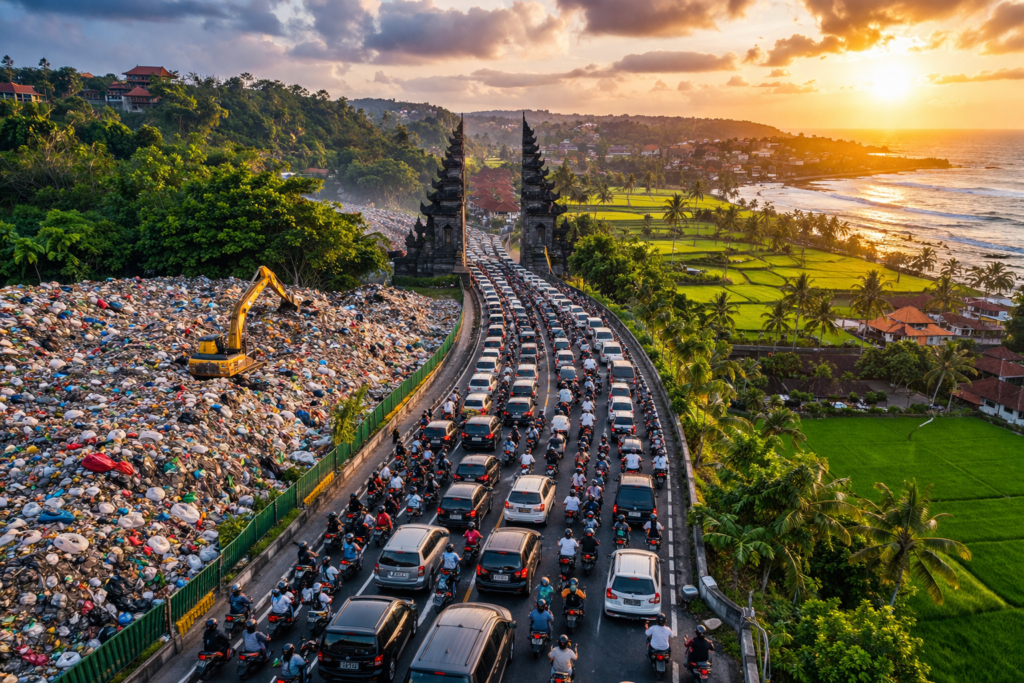
Bali’s Infrastructure Is Struggling to Keep Up
Bali continues to captivate the world with its stunning beaches, vibrant culture, and spiritual atmosphere. Yet behind the postcard-perfect scenery lies a growing reality that both locals and visitors increasingly feel every day: traffic congestion, waste management issues, and infrastructure struggling to keep up with rapid development. As Bali grows into one of the world’s most popular destinations, the island now faces a critical question—how can it balance growth, tourism, and sustainability without losing the magic that made it famous?
Bali at a Crossroads
For decades, Bali has been one of the most iconic travel destinations on the planet. Known as the Island of the Gods, it offers a unique blend of natural beauty, rich traditions, spiritual culture, and warm hospitality.
Millions of travelers arrive each year to experience Bali’s beaches, temples, rice terraces, and vibrant lifestyle. Tourism has transformed the island into one of Southeast Asia’s most dynamic economies, creating jobs and opportunities for people across the region.
But success often comes with new challenges.
Behind the beauty that fills social media feeds and travel magazines, Bali is quietly facing three major issues that are becoming impossible to ignore:
- Traffic congestion
- Waste management
- Infrastructure limitations
These challenges are not unique to Bali. Many global destinations have experienced similar growing pains. However, for a relatively small island with rapid development, the pressure can be particularly intense.
Understanding these issues is important not only for residents and policymakers, but also for travelers, investors, and anyone who cares about Bali’s long-term future.
Traffic Congestion: When Paradise Slows Down
Anyone who has driven through areas like Canggu, Seminyak, Kuta, or Uluwatu during peak hours has likely experienced Bali’s traffic firsthand.
What used to be a peaceful drive through tropical scenery can sometimes turn into long lines of cars and motorbikes moving at walking speed.
A journey that should take 15 minutes may easily turn into 40 minutes or more.
So what is causing the growing traffic problem?
Rapid Growth in Vehicles
The number of vehicles in Bali has increased dramatically over the past decade. Motorcycles remain the most common mode of transport because they are affordable, flexible, and able to navigate narrow roads.
But when thousands of additional vehicles are added every year, the roads quickly become overwhelmed.
In busy tourism districts, the volume of traffic can sometimes exceed what the infrastructure was designed to handle.
Road Infrastructure That Hasn’t Kept Pace
Many of Bali’s roads were built decades ago when traffic levels were much lower.
At the time, no one imagined the island would host millions of international visitors every year or experience such rapid property development.
As tourism expanded, many small village roads gradually transformed into busy commercial corridors filled with cafes, villas, restaurants, and hotels.
Unfortunately, the road capacity often remained the same.
Tourism and Development Boom
Tourism has been an incredible economic engine for Bali. It has encouraged the development of world-class resorts, boutique hotels, luxury villas, beach clubs, and countless lifestyle businesses.
Yet with this growth comes increased mobility.
More tourists mean more airport transfers, tour vehicles, taxis, delivery services, and private transportation.
At the same time, population growth and migration from other parts of Indonesia have increased the number of residents who rely on the same road network.
The Wider Impact of Traffic
Traffic congestion affects more than just travel time.
It can lead to:
- higher fuel consumption
- increased air pollution
- rising logistics costs for businesses
- frustration for residents and visitors
- reduced travel experiences for tourists
Some travelers have even begun mentioning traffic as a downside in travel reviews, something that was rarely heard a decade ago.
While traffic alone will not stop visitors from coming to Bali, it highlights the importance of long-term planning.
Waste Management: A Growing Environmental Concern
Another issue that frequently appears in discussions about Bali’s future is waste management.
At certain times of the year, especially during the rainy season, images of plastic waste washing onto beaches occasionally circulate online and spark global conversation.
For an island famous for its natural beauty, this challenge is especially sensitive.
Where Does the Waste Come From?
The sources of waste in Bali are complex and varied.
They include:
- household waste from a growing population
- waste generated by tourism businesses
- single-use plastic packaging
- marine debris carried by ocean currents
As the island’s economy and population expand, the total amount of waste generated continues to increase.
Managing this waste effectively has become one of the island’s most urgent environmental priorities.
Waste Management Systems Under Pressure
Like many fast-growing regions, Bali’s waste management systems are still evolving.
Challenges include:
- limited landfill capacity
- inconsistent waste sorting practices
- lack of recycling infrastructure in some areas
- the need for greater public awareness
Some landfill sites have already reached critical capacity levels, making it clear that traditional disposal methods alone are not a sustainable long-term solution.
Environmental and Tourism Impact
If waste is not properly managed, the consequences can affect both ecosystems and tourism.
Possible impacts include:
- damage to marine environments
- pollution of rivers and coastal areas
- reduced aesthetic appeal of beaches and landscapes
- negative perceptions among visitors
Because Bali’s economy relies heavily on its environmental appeal, maintaining clean beaches and natural landscapes is essential.
Encouragingly, many local communities, NGOs, and environmental groups are actively working on solutions—from beach clean-ups to plastic reduction campaigns.
Infrastructure: Racing to Keep Up with Growth
Over the past two decades, Bali has experienced remarkable development.
The island’s international airport handles millions of passengers each year, new tourism areas continue to emerge, and property investment has expanded into previously quiet regions.
However, rapid growth can place significant pressure on infrastructure.
Transportation Systems
One of the most discussed topics is the absence of a large-scale public transportation network.
Unlike many major cities around the world, Bali currently relies heavily on private vehicles, ride-hailing services, and tourism transport providers.
Several proposals have been discussed over the years, including:
- light rail systems
- tram networks
- bus rapid transit systems
If implemented successfully, these options could dramatically reduce road congestion.
Water Resources
Tourism development also increases demand for fresh water.
Hotels, resorts, swimming pools, and landscaped gardens all require significant water supply.
In some regions, concerns have emerged about groundwater usage and long-term sustainability.
Water management will likely become an increasingly important topic as Bali continues to grow.
Energy Demand
As businesses expand and new developments appear, electricity demand also rises.
Ensuring stable and reliable energy supply is critical for maintaining economic growth and supporting modern infrastructure.
Drainage and Urban Planning
Urban growth can also affect drainage systems.
In some areas, seasonal flooding has become a concern, often caused by inadequate drainage capacity combined with rapid construction.
These issues highlight the importance of long-term urban planning.
Challenges Can Also Create Opportunities
While these challenges may seem daunting, they also present opportunities for innovation and improvement.
Many global destinations have faced similar issues during periods of rapid tourism growth.
Cities that successfully addressed them often emerged stronger and more sustainable.
Bali has the potential to do the same.
Emerging Ideas and Solutions
Several initiatives and ideas are already being explored.
Modern Public Transport
Developing reliable and efficient public transportation could significantly reduce traffic congestion while improving mobility for both residents and visitors.
Advanced Waste Processing
Technologies such as:
- waste-to-energy systems
- improved recycling programs
- composting facilities
could help transform waste into resources rather than landfill problems.
Stronger Urban Planning
Careful zoning and development regulations can help balance economic growth with environmental preservation.
Protecting green spaces, agricultural land, and coastal ecosystems will be critical for maintaining Bali’s character.
The Role of Communities and Visitors
Government policy alone cannot solve these challenges.
Local communities, businesses, and visitors all play a role in shaping Bali’s future.
Small actions can collectively make a big difference:
- reducing plastic consumption
- supporting sustainable businesses
- respecting local environments
- participating in responsible tourism
Bali is more than just a destination—it is home to millions of people and a place of deep cultural heritage.
Protecting it requires shared responsibility.
The Future of Bali
Bali stands at an important moment in its development.
Its global popularity continues to grow, bringing economic opportunities and international recognition.
At the same time, traffic congestion, waste management challenges, and infrastructure limitations remind us that growth must be managed carefully.
The choices made today—by policymakers, businesses, communities, and visitors—will shape what Bali looks like in the decades ahead.
With thoughtful planning, innovative solutions, and collective commitment, Bali has the potential to become not only one of the world’s most beautiful destinations, but also one of the most sustainable.
The island has evolved many times throughout its history.
And with the right balance between development and preservation, Bali can continue to thrive while preserving the very qualities that made the world fall in love with it in the first place.


