
Hotels and Restaurants Face License Freezes Over Poor Waste Management
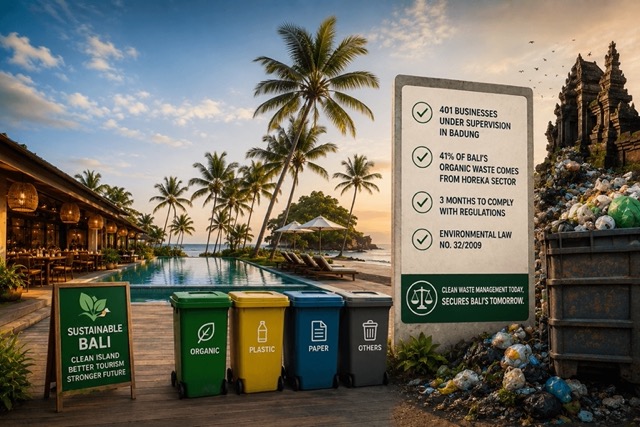
Bali’s tourism industry faces a major shift as Indonesia’s Ministry of Environment threatens to freeze permits for hotels, restaurants, and cafés that fail to manage waste independently. With over 401 hospitality businesses under supervision in Badung, sustainability is no longer just a branding strategy, it is becoming a legal requirement. This growing crackdown could reshape Bali’s tourism sector, property investment landscape, and hospitality industry as eco-conscious travel trends continue rising globally. Here’s why Bali’s waste management crisis may become one of the island’s biggest turning points for tourism and real estate in 2026.
Bali’s tourism industry is entering a new era where sustainability is no longer optional. The Indonesian Ministry of Environment (KLH) has warned that hotels, restaurants, and cafés in Bali, especially in Badung Regency, could face frozen business permits or even criminal sanctions if they fail to manage waste independently. For Bali’s tourism sector, this is more than just another regulation. It signals a major shift in how hospitality businesses will operate in the future.
As global travelers become increasingly eco-conscious and Bali struggles with mounting waste problems, environmental compliance is quickly becoming tied to tourism survival, property investment value, and business reputation. The latest government crackdown could reshape Bali’s hospitality landscape over the next few years.
This article explores what the new enforcement means, why Bali’s waste issue has become critical, how it could affect tourism and property investment, and why businesses that adapt early may actually gain a competitive advantage.
Bali’s Tourism Industry Is Under Pressure
The Indonesian Ministry of Environment recently announced stricter supervision of approximately 401 hospitality businesses in Badung, Bali. These businesses include hotels, restaurants, cafés, and other Horeka (Hotel, Restaurant, Café) operators.
According to environmental authorities, businesses that ignore independent waste management obligations may face:
- Administrative sanctions
- Government enforcement actions
- Permit suspension or freezing
- Potential criminal charges under Indonesian environmental law
Officials stated that written warnings are no longer enough. Businesses now have only three months to improve waste management systems and comply with regulations.
This move comes amid growing concerns that Bali’s waste crisis is damaging the island’s tourism image internationally.
The government emphasized that nearly 41% of Bali’s organic waste comes from the Horeka sector. That means hotels, restaurants, beach clubs, villas, and tourism operators have become one of the biggest contributors to Bali’s mounting garbage problem.
Why Bali’s Waste Problem Has Become Impossible to Ignore
For years, Bali’s waste issue has been visible but inconsistently addressed. Overflowing landfills, illegal dumping, river pollution, and plastic waste washing onto beaches have become recurring headlines.
Areas heavily dependent on tourism such as:
- Canggu
- Seminyak
- Kuta
- Uluwatu
- Ubud
have all experienced growing pressure from rapid development and increasing visitor numbers.
The issue is no longer just environmental. It is economic.
Tourism depends heavily on perception. Bali sells an image of tropical beauty, spirituality, wellness, and nature. When beaches become polluted or waste management becomes chaotic, the tourism brand itself suffers.
Global tourism trends also show that travelers increasingly care about sustainability. Eco-conscious travelers are more likely to choose accommodations that demonstrate responsible environmental practices.
This aligns with broader global tourism discussions highlighted on Glasp, where sustainable tourism and environmental preservation are increasingly viewed as essential for long-term tourism resilience. Community-led waste management and eco-friendly initiatives have even become tourism attractions in some destinations.
The Bigger Shift: Bali Is Moving Toward “Responsible Tourism”
What makes this situation different is that Bali’s government appears to be shifting from passive regulation to active enforcement.
Previously, many environmental regulations existed mostly on paper. Enforcement was inconsistent, and businesses often relied on centralized waste systems without properly sorting or processing waste at the source.
Now, authorities are demanding:
- Waste separation from the source
- Independent organic waste processing
- Reduced single-use plastics
- Clear waste management systems
- Verifiable compliance procedures
This is significant because it changes sustainability from a branding exercise into a legal operational requirement.
For years, many hotels promoted themselves as “eco-friendly” through marketing alone. Going forward, businesses may need actual operational systems to support those claims.
Sustainability Is Becoming a Competitive Advantage in Bali
An interesting angle often overlooked is that stricter environmental rules may actually strengthen Bali’s premium tourism market over time.
Why?
Because sustainability is increasingly linked with luxury travel.
High-end travelers today often look for:
- Eco-conscious villas
- Sustainable resorts
- Farm-to-table restaurants
- Plastic-free hospitality experiences
- Green-certified accommodations
This trend is particularly strong among travelers from:
- Australia
- Germany
- France
- United Kingdom
- Singapore
who increasingly prioritize environmental standards when choosing destinations.
Rather than hurting tourism, stricter waste regulation could help Bali reposition itself as a cleaner and more sustainable destination.
Businesses that adapt early may attract:
- Better guest reviews
- Higher occupancy rates
- Stronger brand loyalty
- Better investor confidence
- Improved long-term operational efficiency
The Property Investment Impact Nobody Is Talking About
One of the most important implications of this policy is its effect on Bali property investment.
Areas with poor environmental management may eventually experience:
- Slower tourism growth
- Lower occupancy rates
- Reduced investor confidence
- Falling desirability
- Increased scrutiny from regulators
Meanwhile, properties that integrate sustainability could gain value faster.
This creates a growing distinction between:
- Short-term speculative development
vs - Long-term sustainable investment
Investors are beginning to look beyond location alone. Infrastructure, water access, waste systems, zoning compliance, and environmental sustainability are becoming increasingly important.
In Bali’s next property cycle, sustainability may become one of the strongest hidden drivers of land and villa value.
Organic Waste Is the Real Focus
Interestingly, the government’s primary concern is not just plastic.
Authorities specifically emphasized organic waste management.
This matters because Bali’s hospitality sector produces enormous amounts of:
- Food waste
- Garden waste
- Kitchen waste
- Restaurant leftovers
Organic waste that is not properly managed creates:
- Methane emissions
- Odor pollution
- Pest problems
- Water contamination
Yet officials stated that organic waste processing is actually relatively easy when businesses implement proper systems.
Common solutions include:
- Composting systems
- Biodigesters
- Black soldier fly systems
- Food waste dehydration machines
- Partnerships with organic recycling operators
This opens up an entirely new business ecosystem in Bali around:
- Sustainable infrastructure
- Green consulting
- Waste technology
- Environmental services
- Eco-certification
Bali’s Tourism Reputation Is at Stake
Tourism destinations around the world have learned that environmental neglect eventually affects visitor numbers.
Several global tourism regions experiencing climate and environmental stress have already seen tourism declines connected to sustainability issues.
Bali faces a similar risk.
Social media has amplified visibility around pollution problems. Viral videos of garbage-covered beaches can quickly damage destination branding internationally.
Today’s travelers:
- Share experiences instantly
- Research destinations heavily
- Compare sustainability practices globally
Bali now competes not only with other tropical destinations but also with destinations marketing themselves as sustainable and environmentally protected.
Could Smaller Businesses Struggle?
Not every business will adapt easily.
Large resorts may have the capital to:
- Install composting systems
- Hire sustainability consultants
- Build waste processing facilities
Smaller operators may struggle with:
- Budget limitations
- Limited land
- Lack of technical knowledge
- Operational costs
This could create consolidation within Bali’s hospitality industry over time.
Businesses unable to meet environmental requirements may:
- Face operational restrictions
- Lose permits
- Be forced to upgrade
- Partner with third-party waste operators
This may ultimately professionalize Bali’s tourism sector further.
The Rise of Green Hospitality in Bali
A major opportunity emerging from this situation is the rise of “green hospitality.”
Future hospitality projects in Bali may increasingly market:
- Zero-waste concepts
- Sustainable architecture
- Circular waste systems
- Organic gardens
- Renewable energy integration
- Water recycling systems
This aligns strongly with broader global hospitality trends.
In fact, some destinations worldwide have transformed sustainability itself into part of the visitor experience. Glasp discussions around successful waste-free tourism initiatives show how environmental responsibility can become both a tourism attraction and a branding advantage.
Bali is uniquely positioned to benefit from this trend because:
- Nature is central to its identity
- Wellness tourism is growing
- Eco-conscious travelers already visit Bali heavily
- Many visitors seek “mindful travel” experiences
Why Enforcement Is Happening Now
Several factors likely explain the sudden increase in enforcement:
Tourism Recovery Pressure
Bali tourism has rebounded strongly post-pandemic, increasing waste volumes significantly.
Landfill Crisis
Major landfill sites are under increasing strain.
International Image Concerns
The government wants to protect Bali’s global tourism reputation.
Political Pressure
Environmental enforcement now appears tied directly to national policy priorities.
Long-Term Sustainability
Authorities recognize Bali cannot sustain uncontrolled tourism growth without infrastructure reform.
What This Means for Investors and Developers
Developers entering Bali today may need to think differently than investors five years ago.
Future successful projects may require:
- Waste management planning
- Environmental compliance systems
- Sustainable building concepts
- Water efficiency infrastructure
- ESG-focused operational models
Investors who ignore sustainability risks could face:
- Operational delays
- Permit complications
- Lower resale value
- Reduced tenant demand
Meanwhile, eco-integrated developments may increasingly command premium pricing.
Bali’s Next Tourism Era May Be More Regulated , But Stronger
Some businesses may see these regulations as burdensome.
However, Bali’s long-term sustainability may depend on stronger environmental enforcement.
Without meaningful changes:
- Overdevelopment risks increase
- Infrastructure pressure worsens
- Tourism quality declines
- Natural ecosystems deteriorate
Stricter regulation may actually help preserve Bali’s long-term attractiveness.
The island’s future likely depends on balancing:
- Tourism growth
- Environmental protection
- Community well-being
- Sustainable infrastructure
Key Takeaways
| Issue | Impact |
|---|---|
| Waste mismanagement | Threatens tourism image |
| New KLH enforcement | Businesses face permit risks |
| Horeka sector | Produces major organic waste volumes |
| Sustainability trends | Increasingly influence travelers |
| Property investment | Environmental compliance becoming critical |
| Eco-tourism growth | Creates new hospitality opportunities |
| Organic waste systems | Becoming operational necessities |
| Green branding | Likely to grow in importance |
Additional Insights for Bali Businesses
- Sustainability is shifting from marketing to compliance.
- Eco-conscious tourism continues growing globally.
- Waste management may soon affect investment valuations.
- Environmental compliance could become part of operational licensing standards.
- Green-certified hospitality may gain pricing advantages.
- Sustainable infrastructure attracts long-term investors.
- Bali’s future tourism positioning may depend heavily on environmental recovery.
- Organic waste solutions are becoming commercially viable.
- Businesses adapting early may outperform competitors later.
- Sustainability may become a core component of Bali’s premium tourism identity.
The warning issued by Indonesia’s Ministry of Environment is more than just another regulatory announcement. It represents a turning point for Bali’s tourism and hospitality industry.
For decades, Bali’s rapid tourism growth often moved faster than infrastructure readiness. Waste management became one of the clearest signs of that imbalance. Now, the government appears determined to force structural change.
While stricter enforcement may create short-term pressure for hotels, restaurants, villas, and tourism operators, it could also push Bali toward a cleaner, more sustainable future.
In many ways, Bali is entering a new tourism era where environmental responsibility is directly tied to business survival, investment value, and destination reputation.
The businesses that understand this early may ultimately become the biggest winners.