
Bali’s Land Is Running Out: Can the Next Generation Still Afford to Buy?
An Investor’s Perspective on Land Scarcity, Market Dynamics, and the Future of Bali Real Estate
Land in Bali is becoming increasingly scarce as tourism, foreign investment, and global lifestyle migration continue to reshape the island. Prices have surged dramatically over the past two decades, transforming land from a relatively accessible asset into one of Southeast Asia’s most competitive property markets. This article explores why Bali’s land supply is tightening, how rising prices affect the younger generation, and what global investors need to understand about the island’s long-term property outlook.
Bali’s Land Is Running Out: Can the Next Generation Still Afford to Buy?
For decades, Bali has been known as a tropical paradise , an island where culture, nature, and lifestyle blend into a unique global destination.
But behind the beauty of rice terraces, temples, and beaches, another story is unfolding.
Land in Bali is becoming increasingly scarce.
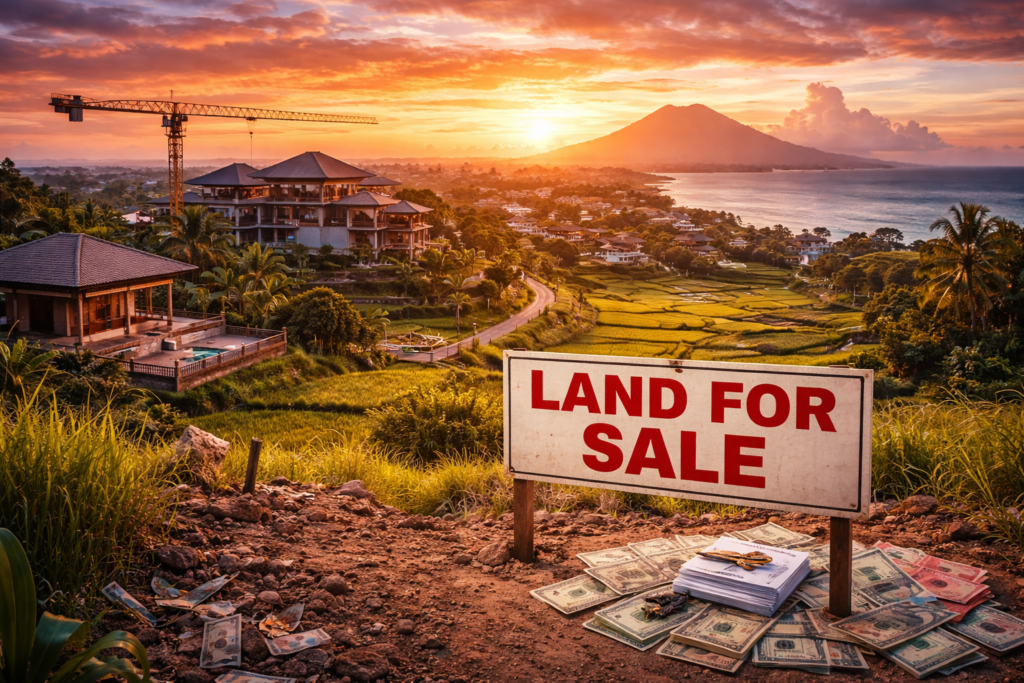
What used to be farmland, coconut groves, or open fields has rapidly transformed into villas, resorts, cafés, co-working spaces, and residential communities. Development has accelerated at an extraordinary pace, especially since Bali became one of the world’s most recognizable tourism brands.
Today, investors, developers, and residents are asking an increasingly important question:
Is Bali running out of land — and what does that mean for the next generation and the future of the property market?
The answer is complex, but one thing is clear: land scarcity is becoming one of the defining factors shaping Bali’s economic future.
A Small Island With Global Demand
To understand Bali’s land market, one must first understand its geography.
Bali is relatively small. The island covers approximately 5,780 square kilometers, which is tiny compared to many global tourist destinations.
Yet despite its limited size, Bali attracts global attention on an extraordinary scale.
Millions of visitors arrive every year, drawn by:
- world-class beaches
- spiritual culture
- tropical lifestyle
- digital nomad infrastructure
- luxury hospitality
- natural beauty
Bali is not just a tourist destination anymore.
It has evolved into:
- a global lifestyle hub
- a remote-work destination
- an international retirement location
- a hotspot for property investment
These factors create intense demand for land.
And unlike many other assets, land has one defining characteristic:
It cannot be expanded.
The Fundamental Economics: Limited Supply, Rising Demand
Real estate markets follow basic economic principles.
When demand increases while supply remains limited, prices rise.
Bali is a textbook example of this phenomenon.
Over the past two decades, demand for land has expanded dramatically due to several key drivers:
- Tourism growth
- Global lifestyle migration
- Foreign investment
- Infrastructure development
- The rise of the digital economy
At the same time, land supply remains restricted by geography, zoning, and environmental considerations.
The result is predictable.
Land prices continue to climb.
The Dramatic Rise of Bali Land Prices
Two decades ago, land in many parts of Bali was still relatively affordable.
Areas that are now considered premium investment zones were once quiet villages surrounded by rice fields.
Consider locations such as:
- Canggu
- Berawa
- Pererenan
- Uluwatu
- Ubud outskirts
In the early 2000s, many of these places were still rural landscapes.
Today, they are among the most sought-after real estate markets in Southeast Asia.
Prices have multiplied many times over.
Land that once sold for a modest amount now reaches levels comparable to prime property markets in international resort destinations.
This dramatic appreciation has created enormous wealth for early landowners and investors.
However, it has also introduced a new challenge.
Affordability.
A Growing Gap: Local Income vs Land Prices
One of the most significant consequences of rising land prices is the growing gap between property values and local purchasing power.
In many parts of Bali today, the price of land has increased much faster than local income levels.
For young professionals entering the workforce, buying land in prime areas can feel increasingly out of reach.
A small plot in a popular tourist area can easily reach millions of dollars depending on location and zoning.
Even in emerging regions, prices continue to trend upward year after year.
For investors, this represents opportunity.
For younger generations, it can represent a challenge.
Why Land in Bali Is Becoming Scarcer
Several powerful forces are shaping Bali’s land scarcity.
Understanding these drivers helps investors better interpret the long-term market outlook.
Tourism Development
Tourism remains the backbone of Bali’s economy.
Hotels, villas, restaurants, beach clubs, wellness centers, and entertainment venues all require land.
As visitor numbers grow, tourism infrastructure expands accordingly.
Each new development consumes land that once served another purpose.
Over time, this gradually reduces available supply.
The Rise of the Global Remote Worker
Over the past decade , and especially after the pandemic , Bali has become one of the world’s most popular destinations for remote workers.
Digital nomads and location-independent professionals are drawn by:
- affordable lifestyle
- vibrant international community
- reliable internet infrastructure
- natural beauty
- creative culture
Many of these professionals eventually transition from renting to investing in property.
This new wave of residents adds further pressure to the land market.
Foreign Investment Interest
Although foreign ownership structures in Indonesia involve specific legal frameworks, global investors continue to show strong interest in Bali property.
Why?
Because Bali offers a rare combination of:
- lifestyle appeal
- tourism demand
- strong rental yields
- long-term appreciation potential
For international investors, Bali often represents both a financial and lifestyle investment.
Land Conversion
Across Bali, agricultural land is gradually converting into tourism or residential use.
Rice fields that once defined the island’s rural landscapes increasingly become:
- villa developments
- boutique resorts
- residential compounds
- hospitality venues
This transformation is one of the most visible changes occurring on the island.
While development supports economic growth, it also reduces the amount of undeveloped land.
Infrastructure Expansion
Infrastructure improvements often trigger property booms.
New roads, airport expansions, ports, and tourism corridors make previously remote areas more accessible.
As accessibility improves, investors move in.
This process accelerates land value growth.
Is Bali Following the Path of Global Cities?
What Bali is experiencing today mirrors trends seen in major global cities.
Places such as:
- Singapore
- Hong Kong
- London
- Tokyo
- Sydney
have long faced land scarcity challenges.
In these cities, land prices reached levels where many residents could no longer purchase property in central areas.
Instead, alternative housing patterns emerged.
People moved to:
- smaller homes
- suburban areas
- vertical living (apartments)
Bali may eventually experience similar transitions.
However, the island’s tourism-driven economy makes its situation unique.
The Social Impact of Land Scarcity
Rising land prices do not only affect investors.
They also shape the social landscape of the island.
Several long-term implications are worth considering.
Housing Accessibility
As land becomes more expensive, housing affordability becomes a growing concern.
Young families may need to move farther away from major tourism centers to purchase property.
This creates new residential patterns across the island.
Cultural Landscape Changes
Bali’s cultural identity is deeply tied to its landscapes, especially rice terraces and village communities.
Rapid development can alter these traditional environments.
Balancing growth and cultural preservation is one of the island’s ongoing challenges.
Agricultural Preservation
The famous Subak irrigation system, recognized internationally for its cultural significance, relies on active agricultural land.
If too much farmland disappears, traditional farming systems could face pressure.
A New Perspective: Land as a Long-Term Legacy Asset
One interesting perspective is how previous generations approached land ownership.
In many Balinese families, land was traditionally purchased or inherited not purely for financial gain.
It represented:
- family heritage
- long-term security
- community belonging
- generational wealth
Today’s rising land prices reinforce the wisdom of those long-term decisions.
Land in Bali has proven to be one of the most resilient assets on the island.
Opportunities for Investors in a Land-Constrained Market
Despite concerns about scarcity, limited land supply can actually strengthen the long-term investment case.
In real estate markets worldwide, scarcity often drives value.
For investors, this can create several advantages.
Strong Capital Appreciation
Historically, land values in high-demand areas tend to appreciate significantly over time.
Bali’s growing global reputation suggests that long-term demand will remain strong.
Tourism-Based Rental Income
Villas and hospitality properties in Bali can generate attractive rental returns.
Locations with strong tourism demand often benefit from consistent occupancy rates.
Lifestyle Investment Value
Many investors are not motivated solely by profit.
Owning property in Bali also offers lifestyle benefits:
- tropical living
- vacation home potential
- retirement options
This emotional value further supports demand.
Emerging Investment Zones
As central areas become more expensive, new investment corridors are beginning to emerge.
Investors increasingly look toward:
- North Bali
- West Bali
- rural regions with future infrastructure plans
- areas near upcoming tourism developments
Historically, many of Bali’s current hotspots were once considered remote.
Early investors who recognized long-term potential benefited greatly.
Government Policies and Land Management
The future of Bali’s land market will also depend on policy decisions.
Key areas of focus include:
- zoning regulations
- environmental protections
- agricultural land preservation
- tourism development planning
Government efforts to balance economic growth with sustainability will shape the island’s development trajectory.
Can the Next Generation Still Buy Land?
Returning to the original question:
Can the next generation still afford land in Bali?
The answer depends on several factors.
For prime areas such as Seminyak or central Canggu, prices may already be beyond reach for many local buyers.
However, opportunities still exist in:
- emerging regions
- smaller land parcels
- early-stage developments
Just as previous generations invested in land before major development occurred, the next generation may find opportunities in areas that are only beginning to grow.
The Long-Term Outlook for Bali’s Property Market
Looking ahead, several trends are likely to shape the island’s property future.
Continued Global Interest
Bali’s reputation as a global destination remains strong.
Interest from travelers, entrepreneurs, and remote workers continues to grow.
Limited Land Supply
Because Bali’s geography is fixed, land scarcity will remain a defining market factor.
Sustainable Development Pressure
Environmental sustainability will likely become a greater focus in planning decisions.
Market Maturation
As the market evolves, property development may become more structured and regulated.
Bali’s land market is undergoing a transformation driven by global demand, tourism growth, and limited supply.
For investors, this environment presents both opportunity and responsibility.
Land scarcity often strengthens long-term property values, making Bali one of the most compelling real estate markets in Southeast Asia.
At the same time, thoughtful development will be essential to preserve the island’s cultural and environmental identity.
For the next generation, the challenge will be finding new ways to participate in the property market, whether through emerging locations, innovative ownership models, or early-stage investments.
One thing is certain:
Land in Bali will remain one of the island’s most valuable assets for decades to come.
For investors who understand its dynamics, the story of Bali’s land is far from over.
Tanah Bali Semakin Mahal: Apakah Generasi Lokal Akan Tersingkir?